
Artificial intelligence systems like ChatGPT, Claude, Perplexity, Gemini, Copilot, and similar large language models (LLMs) have become, perhaps, a bit too present in our daily quest for feedback and answers. We enjoy using them because they generate original, easy-to-read, and ‘easy to believe’ responses. This versatility, however, masks a very profound limitation: these systems struggle to acknowledge the boundaries of their knowledge. They rarely say, ‘I don’t know,’ and when they do not know, they generate content that seems to have the same confident tone as what we believe to be reliable responses. As researchers, users, and developers of AI-based tools, the authors of this article aim to understand why AI systems exhibit this ‘overconfidence problem,’ or ‘omni-knowledge,’ what it means for users, and what can be done to address this significant usage limitation. The Architecture of Omni-knowledge: How Large Language Models Work To understand why AI systems struggle with accepting their own limitations, we must first understand how these systems work. Large language models are not knowledge databases in the traditional sense; they are pattern-matching and pattern-searching mechanisms that are trained on large amounts of data to predict outcomes given the relationship and proximity of words. This allows them to predict which words should answer a question. Otherwise said, the answer comes from the closeness of the question to the words available to answer it .1 When they do not know, they generate content that seems to have the same confident tone as what we believe to be reliable responses. However, this association of ideas finds its limits when the words and documents available are not sufficiently close to the question asked. This is when the phenomenon of AI hallucination appears, which means that AI generates plausible but entirely fabricated information .2 Remember that uncle who had ‘travelled the world and had all the answers’? This is an analogy of how this hallucination phenomenon happens: your uncle may have never been to India, but, given his experience in Pakistan, he projects the similarities and differences between one and the other based on information he has recollected from reading books, and he answers questions as if he had been there. This type of issue is acknowledged by OpenAI, saying that ‘hallucinations remain a fundamental challenge for all large language models’ even as capabilities improve, occurring when models ‘ confidently generate an answer that isn’t true ‘.3 The real issue is that theoretical work has demonstrated that hallucination is not merely a technical problem to be solved through better training, but rather ‘an innate limitation’ of LLMs because these hallucinations, as explained before, are at the basis of the functioning of the algorithms used by AI; it’s about finding close relationships and delivering an answer, forcing it to create inexistent realities 4 that are like the relationships it has found. This mathematical truth means that no amount of engineering can eliminate hallucination; it can only be reduced. This point is also reinforced by recent work from OpenAI, Why Language Models Hallucinate , which shows that hallucinations arise even when models are well trained, because prediction-based systems must generate a plausible continuation when certainty is low. What Can Be Done: Addressing AI Omni-knowledge Mitigating the confidence problem in AI systems requires coordinated action across multiple stakeholders: AI developers improving systems, users developing critical engagement practices, and institutional frameworks establishing appropriate use boundaries. From a technical perspective, AI could be given certain limitations, although none will completely cover all potential subjects and issues likely to be generated after a prompt is issued. Researchers at Oxford University have developed methods to detect when a
Tag: “hallucination”
-

Mad Cave June 2026 Full Solicits: Junk Punch, Land Of Never & Blüdwire
Posted in: Comics, Mad Cave Studios | Tagged: 51, Bludwire, Is Ted Okay, Junk Punch, Land Of Never, Last Starfighter Mad Cave June 2026 Full Solicits: Junk Punch, Land Of Never & Blüdwire Mad Cave Studios’ June 2026 solicits include Junk Punch #1, Land Of Never #1, Blüdwire #1, 51 #4, Is Ted Okay #5 and The Last Starfighter Article Summary Mad Cave Studios launches Junk Punch, Land Of Never, and Blüdwire with new #1 issues in June 2026. Fan favorites like 51 and Is Ted OK? return with new issues packed with mystery and action. Ray Fawkes brings The Phantom Vs The Red Dragons one-shot for a high-stakes South China Sea showdown. The Last Starfighter movie adaptation is reissued, plus continuing titles like Gatchaman and Flash Gordon. Mad Cave Studios’ June 2026 solicits and solicitations include the launches of Junk Punch #1 by Paul Tobin, Carlos Javier Olivares, Land Of Never #1 by Steve Orlando and Miguel Mora, Blüdwire #1 by Paul Allor and Ermitis Blanco, and The Phantom Vs The Red Dragons one-shot by Ray Fawkes and Lynne Yoshii… as well as the usual Gatchaman, Dick Tracy, Flash Gordon, Speed Racer, War Wolf, Dog Tag, Exit City, Honor And Curse, Terrorbytes, Barbarian Behind Bars, Exploit, Pretty Hate Machine, Planet Atmos, Racer X, and certain comics that have got all sorts of people excited, 51 and Is Ted OK? as well as a republication of Marvel’s The Last Starfighter movie adaptation by Bill Mantlo, Bret Blevins and Tony Salmons…… BLUDWIRE #1 (OF 5) CVR A VICTOR IBANEZ (MR) (W) Paul Allor (A) Ermitis Blanco (CA) Victor Ibanez Ace and Zora were built for men’s pleasure. Now they’re building a life of their own, one bullet at a time. When sex bot Ace mounts a dangerous rescue mission, she isn’t starting a revolution. She’s trying to save the woman she loves. But Ace and Zora are valuable property, and a corporate kill squad is hot on their trail. Bullets fly. Metal screams. Rivers run red with blood and coolant. From critically-acclaimed writer Paul Allor and artist Ermitis Blanco, Blüdwire is a tender love story surrounded by a hail of bullets. Love is love, but liberation is violent. $4.99 6/24/2026 JUNK PUNCH #1 (OF 5) CVR A CARLOS JAVIER OLIVARES (MR) (W) Paul Tobin (A) Carlos Javier Olivares, Colleen Coover (CA) Carlos Javier Olivares In a near-future world, peculiar new compulsions have arisen to afflict individuals in bizarre ways, such as a need to paint all pigeons pink or the unfortunate craving to tell the truth on dating apps. One such individual is Clara Castanelle, aka Junk Punch, who “suffers” an addiction to punching people square in their junk! From Eisner-winning author Paul Tobin and Probably Even More Talented Artist Carlos Olivares comes the story of one woman’s quest to solve a bizarre series of thefts, such as kisses stolen from willing and waiting lips! JUNK PUNCH! It’s entertainment with IMPACT! $4.99 6/3/2026 LAND OF NEVER #1 (OF 6) CVR A MIGUEL MORA (W) Steve Orlando (A/CA) Miguel Mora Six months ago, Jim Hoke’s daughter Wendy disappeared from her room. All Jim caught was a glimpse of a hulking figure at the window—the kind of late night vision that’s easily written off as a hallucination. No one believes Jim’s story—and six months later, the retired pathologist is just looking for anyone who’ll still listen. And even if he finds someone, should they believe him? Jim already retired early for planting evidence against an alleged killer. His word doesn’t mean much—and it means even less with him as a suspect in Wendy’s
-

Postgraduate Research Symposium showcases global research innovation
From 19 to 20 March, Xi’an Jiaotong-Liverpool University (XJTLU) hosted the 2026 Postgraduate Research Symposium, bringing together nearly 550 PhD students from 13 universities and research institutes in China and abroad. The event featured 614 presentations, including 329 posters and 285 oral presentations across multiple disciplines. With support from the UK-Jiangsu World Class University Consortium, the symposium provided an international platform for PhD students to present their work, exchange ideas and receive feedback from academics, industry experts, and fellow researchers. Poster presentation at the 2026 Postgraduate Research Symposium The event concluded with an award ceremony on 20 March, which recognised outstanding presentations. According to XJTLU Graduate School, award-winning students from XJTLU will have the opportunity to represent the University at the second XJTU-XJTLU-UoL Doctoral Wisdom Convergence Camp in April. Sharing ideas across borders Raj Roy, a PhD student in Chemistry at New York University Shanghai, says he joined the symposium to exchange ideas with researchers working on similar problems. ‘I don’t believe research is a win-or-lose game. When a problem gets solved, whether by me or by someone else, it’s a win for humanity. It’s a small world in research, and it’s very likely that many people are working on similar problems. ‘Symposiums like this bring such people together, and gives an opportunity to exchange perspectives, discuss different approaches, learn from each other’s mistakes, and have meaningful debates that help move the field forward,’ he says. Raj Roy Roy, whose research explores ways to enhance the effectiveness of radiation therapy, says interacting with researchers from different cultural backgrounds is one of the most valuable aspects of academic events. ‘I believe cultural differences can also have an impact on research, because people from different cultures often have their thinking shaped by different experiences. As a result, they may approach the same research problem in unique ways. Seeing these different perspectives is valuable because it helps us think about problems in ways we might not have considered before,’ he says. ‘AI for Research’ A highlight of the symposium is the themed exhibition, ‘AI for Research’, which took place on the afternoon of 20 March. The exhibition showcased how PhD students integrate artificial intelligence into their research across diverse fields. Lok Hang Cheung, a PhD student at XJTLU’s Design School, who presented at the exhibition, focuses on the application of AI in architectural design. In his view, the emergence of AI has allowed many researchers without a computer science background to cross traditional boundaries. Lok Hang Cheung ‘AI for Research’ exhibition ‘In the past, I mainly explored – on a theoretical level – how designers interact with computer tools. But now, I can spend just a few days building a small application to test whether my ideas actually work. My research now has become inseparable from AI,’ he says. AI is also opening up new possibilities in life sciences, says Yu Lu, a PhD student in biological sciences at China Pharmaceutical University. She studies the molecular mechanisms involved in the initiation and progression of breast cancer. ‘Life science and biomedical research involve enormous amounts of data, from tumour gene sequencing to protein interaction analysis and drug molecule screening,’ she says. ‘Traditional research methods can be time-consuming and inefficient. AI, with its ability to process large datasets and make accurate model predictions, can significantly shorten research cycles and reduce research costs.’ Yu Lu While many see AI as a powerful tool, others also emphasise the importance of reflecting critically on its use. Vladimir Milić, from Serbia, is a PhD student at XJTLU’s School of Humanities and Social Sciences, studying China’s engagement with Central and
-

TrustCloud unveils AI-native platform to transform GRC
TrustCloud has launched a security assurance platform that connects governance, risk and compliance (GRC) with day-to-day security operations, with an emphasis on automation and continuous monitoring for chief information security officers. The Boston-based company calls the product an “AI-native Security Assurance Platform” aimed at organisations looking to replace manual GRC processes and workflow-heavy tools. It is positioned as an alternative to established products such as Archer and OneTrust, which are widely used for risk and compliance management in large enterprises. TrustCloud says enterprise security leaders struggle to produce timely, board-ready reporting when GRC work depends on tickets and manual evidence collection. It also argues that traditional approaches do not keep pace with shifting technology environments, including cloud deployments and AI adoption. “Enterprise CISOs are frustrated with legacy GRC tools-they inundate security and GRC teams with manual work, make it impossible for CISOs to confidently report status and outcomes with their Boards, and are not designed to monitor and keep up with the ever-changing digital, AI, and IT cyber risk landscape. It’s like their teams are being forced to protect a vast ocean with a paper boat,” said Sravish Sridhar, CEO and founder of TrustCloud. The platform uses continuous control monitoring and integrates data across systems. TrustCloud says it can consolidate structured and unstructured signals from cloud, on-premise and business applications into a unified store, which it describes as a “hybrid data fabric” feeding a “GRC data lake”. Product approach The product centres on what TrustCloud calls “Security Assurance”, which it describes as a shift from compliance-driven work. The company argues that assurance requires broader visibility into controls across the IT environment and more frequent assessment than periodic sampling. TrustCloud says the platform uses “Assurance AI” tied to a “Control Graph” that maps continuous control monitoring results to GRC objectives. It says this structure keeps outputs “hallucination-free” and links gaps and remediation actions to business impact. Reporting is another focus. TrustCloud argues that many security and GRC tools primarily output lists of actions as tickets, while its product produces reporting that links changes to business impact and supports budgeting and prioritisation. Customer use TrustCloud says its customers include Global 2000 organisations in highly regulated sectors, but it did not provide customer counts or name specific industries. PDS Health provided a reference customer quote. “CISOs don’t need more workflows-we need clarity,” said Nemi George, vice president of IT and chief information security officer at PDS Health. George described a data-driven operating model that draws on multiple telemetry sources. “GRC Transformation is about moving from manual processes to a data-driven understanding of our control posture and what it means for the business, powered by real-time telemetry and unstructured data feeds from our security, IT, and business applications,” George said. Claims and metrics TrustCloud made several performance and financial claims about organisations using its approach. It says “most” achieved 12-times ROI by linking compliance directly to revenue growth, cut costs by an average of USD $3 million per year, and reduced residual risk by 60% per year. The company did not provide methodology, sample size, or supporting data for those figures. It also says organisations can reduce internal audit times from 28 days to three and save an average of 63 person-days of manual work per user annually. TrustCloud attributes these outcomes to continuous control monitoring and automated evidence collection, which it says reduce time spent on periodic audits and testing. The platform is aimed at large, complex environments where GRC deployments have historically taken significant time. TrustCloud says some implementations have run beyond two years and cost millions of dollars, and it is
-

Project Songbird review: a haunting indie horror about the cost of creativity
Developer Conner Rush / FYRE Games Publisher FYRE Games (PC) / Dojo System (Console) Format PC, PlayStation 5 (reviewed), Xbox Series X/S Platform Unity Release Date March 26, 2026 Indie horror lives and dies on atmosphere, largely because smaller budgets demand a tighter scope, and spectacle usually takes a back seat to mood, metaphor, and feeling. Project Songbird, a new psychological horror game from FYRE Games’ solo dev Conner Rush, understands that balance well. A compact, story-driven survival horror, Project Songbird leans heavily on its aesthetics, sound, and a surprisingly personal narrative about creativity and the struggle to make art. You wake up in a flat full of clutter and the previous evening’s, if not week’s, remnants – empty bottles, scattered clothes, and dirty dishes. Dakota, a musician suffering from a bout of creative paralysis, is having a hard time. Hoping isolation might shake something loose, she agrees to retreat to a remote cabin deep in the Appalachian wilderness to finish her next album. It’s a classic horror setup: one person, one cabin, far too much forest, and the creeping dread that something may not be all it seems, especially as the sunsets. But the game treats that traditional premise less like a slasher prologue and more like a quiet meditation on artistic pressure. For a time, you could be forgiven for thinking you’re playing a new Life is Strange as you tap on guitars and play records and listen to Dakota’s softly spoken introspection. At least at first, but things really do shift when the sun sets. Where indie games can succeed is in crafting a defined and unique visual identity, and Project Songbird doesn’t disappoint. This Unity-made game is indie in the best possible sense, and the whole thing looks as though it’s been shot through a Super 8 camera lens. There’s a thick organic grain, soft-focus lighting, a subtle use of depth of field, a flickering motion, and subtle glitching that make every scene feel handmade and found. The early moments have a strangely cosy quality. Wandering around Dakota’s cabin, listening to vinyl records from her (Conner’s?) collection and exploring the surrounding woods feels a bit like stepping into a homemade music video, or a folksy indie album sleeve brought to life. Then the sun sets. When darkness falls, the red door appears, and those quiet evenings fracture into surreal nightmare sequences. Each visit through that door sends Dakota into distorted environments where reality bends, and, in the later game, memory bleeds into hallucination, and the world takes on an unreliable P.T.-like maze of homely corridors that never quite lead to where you think. Sign up to Creative Bloq’s daily newsletter, which brings you the latest news and inspiration from the worlds of art, design and technology. The contrast between the warm daytime aesthetic, the jangle of guitar music and easy pace, and the night’s psychological horror is one of the game’s smartest ideas, and the shift lands every time the red door draws me in. Project Songbird plays in first person and sticks fairly close to survival-horror conventions, where item use, stealth, and exploration drive most of the experience. The toolkit is simple: solve puzzles, manage a small inventory, and occasionally defend yourself against shadowy enemies, tree-like creatures that stalk you with stiff staccato-like animation. You’ll unlock doors, cut through wire fences, restart generators, and search for tools that let you push further into the forest, exploring a ruined church, mines, and more. Combat exists, but it rarely becomes the focus, and is mostly basic melee weapons and a few limited ranged options that can be
-
Enterprise AI agents keep operating from different versions of reality — Microsoft says Fabric IQ is the fix
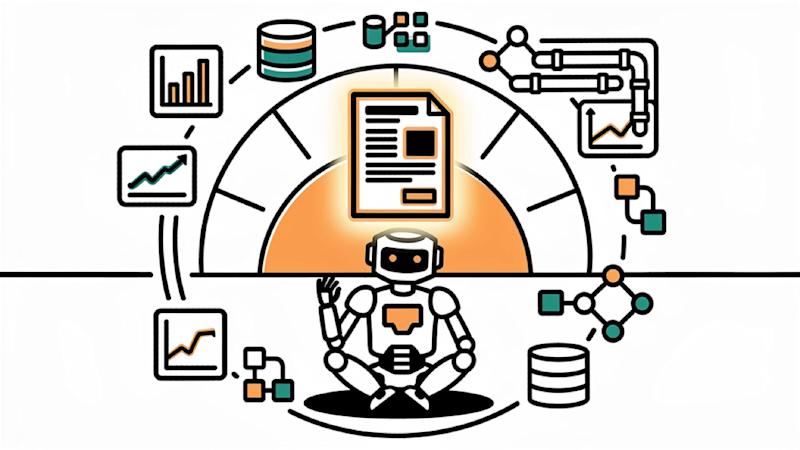
In 2026, data engineers working with multi-agent systems are hitting a familiar problem: Agents built on different platforms don’t operate from a shared understanding of the business. The result isn’t model failure — it’s hallucination driven by fragmented context. The problem is that agents built on different platforms, by different teams, do not share a common understanding of how the business actually operates. Each one carries its own interpretation of what a customer, an order or a region means. When those definitions diverge across a workforce of agents, decisions break down. A set of announcements from Microsoft this week directly targets that problem. The centerpiece is a significant expansion of Fabric IQ , the semantic intelligence layer the company debuted in November 2025. Fabric IQ’s business ontology is now accessible via MCP to any agent from any vendor, not just Microsoft’s. Alongside that, Microsoft is adding enterprise planning to Fabric IQ, unifying historical data, real-time signals and formal organizational goals in one queryable layer. The new Database Hub brings Azure SQL, Cosmos DB, PostgreSQL, MySQL and SQL Server under a single management plane inside Fabric. Fabric data agents reach general availability. The overall goal is a unified platform where all data and semantics are available and accessible by any agent to get the context that enterprises require. Amir Netz, CTO of Microsoft Fabric, reached for a film analogy to explain why the shared context layer matters. “It’s a little bit like the girl from 50 First Dates,” Netz told VentureBeat. “Every morning they wake up and they forget everything and you have to explain it again. This is the explanation that you give them every morning.” Why MCP access changes the equation Making the ontology MCP-accessible is the step that moves Fabric IQ from a Fabric-specific feature into shared infrastructure for multi-vendor agent deployments. Netz was explicit about the design intent. “It doesn’t really matter whose agent it is, how it was built, what the role is,” Netz said. “There’s certain common knowledge, certain common context that all the agents will share.” That shared context is also where Netz draws a clear line between what the ontology does and what RAG does. He did not dismiss retrieval-augmented generation as a technique — he placed it specifically. RAG handles large document bodies such as regulations, company handbooks and technical documentation, where on-demand retrieval is more practical than loading everything into context. “We don’t expect humans to remember everything by heart,” he said. “When somebody asks a question, you have to know to go and do a little bit of a search, find the right relevant part and bring it back.” But RAG does not solve for real-time business state, he argued. It does not tell an agent which planes are in the air right now, whether a crew has enough rest hours, or what the current priority is on a given product line. “The mistake of the past was they thought one technology can just give you everything,” Netz said. “The cognitive model of the agents is similar to humans. You have to have things that are available out of memory, things that are available on demand, things that are constantly observed and detected in real time.” The execution gap analysts say Microsoft still has to close Industry analysts see the logic behind Microsoft’s direction but have questions about what comes next. Robert Kramer, analyst at Moor Insights and Strategy, noted that Microsoft’s broad stack gives it a structural advantage in the race to become the default platform for enterprise agent deployments. “Fabric ties into Power BI, Microsoft 365, Dynamics and
-

SEO Test Shows It’s Trivial To Rank Misinformation On Google
An SEO crafting a newsletter with AI spotted a hallucination about a March 2026 Google Core Update and decided to publish it as an experiment to see how misinformation spreads. While search marketing industry publications ignored the fake news some independent SEOs picked it up and ran with it without first checking the factual accuracy of the news. Mistake Leads To A Double Take The person who did the experiment, Jon Goodey (LinkedIn profile), published a LinkedIn article that purposely contained an AI hallucination about a non-existent March 2026 Google Core update. He explained, in a subsequent Linkedin post, that his AI workflow contains human quality control to catch AI mistakes and when he spotted it he decided to go ahead and publish it to see if anyone would dispute or challenge the false information. Google Ranks Misinformation Goodey explained that it was Google itself that fueled the misinformation about the fake core algorithm update as his LinkedIn newsletter ranked for the phrase Google March Update 2026. The fake news ranked in Google’s classic search and in AI Overviews. He explained: ‘My LinkedIn article began ranking on the first page of Google for ‘Google March update 2026.’ Not buried on page three. Right there, visible to anyone searching for information about recent Google algorithm changes. …Google’s own AI Overview feature picked up the fabricated information and presented it as fact.’ Google’s fact checking in the search results is basically non-existent, so it’s not surprising that Google’s search engine would rank the fake information, especially for anything related to SEO. Using Google for SEO queries is like playing a slot machine, you have no idea if the information will be right or a total fabrication. Searching for information about a dubious black hat tactic (like Google stacking) may cause Google to actually validate it, potentially misleading an honest business person who wouldn’t know better. Screenshot Of Google Recommending A Black Hat SEO Tactic This is a longstanding black spot on Google’s search results and is why it’s not surprising to see Google spew out misinformation about a fake Google update. Websites Echo Misinformation The result is that SEO websites began repeating the false update information because of course, Google core updates are a traffic magnet and a way some SEOs attract potential clients. There’s a long history in the SEO community of stirring up noise about non-existent updates, so again, not surprising to see SEO agencies pick up this ball and run with it. Goodey shared: ‘Multiple websites published detailed, authoritative-sounding articles about the ‘March 2026 Core Update,’ treating it as confirmed fact. These weren’t throwaway blog posts. They were detailed pieces with specific claims about Gemini 4.0 Semantic Filters, Information Gain metrics, and recovery strategies.’ Most News Sites Ignored The Fake Update SEJ and our competitors ignored the fake March update news. But a technology site apparently did not, with Goodey calling them out about it. He wrote: ‘Another site, TechBytes, went even further with a piece by Dillip Chowdary headlined ‘Google March 2026 Core Update: Cracking Down on ‘Agentic Slop’.’ (Oh, the irony…). This article invented specific technical details including claims about a ‘Gemini 4.0 Semantic Filter,’ a ‘Zero Information Gain’ classification system, and a ‘Discover 2.0 Engine’ prioritising long-form technical narratives.’ Google Has A Policy About Fact Checking I recall Google’s Danny Sullivan talking about how Google doesn’t do fact checking but I couldn’t find his tweet or statement. There is however a news report published in Axios related to fact checking where a Google spokesperson affirms that Google will not abide by an EU law that requires
-
In-Vehicle Generative AI Platforms Market Size, Share & Forecast to 2036
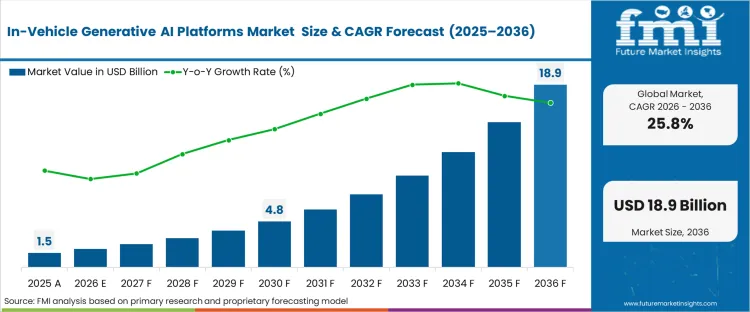
In-Vehicle Generative AI Platforms Market Size, Market Forecast and Outlook By FMI The in-vehicle generative ai platforms market was valued at USD 1.3 billion in 2025. The industry is poised to reach USD 1.9 billion in 2026 at a CAGR of 25.80% during the forecast period. Sustained investment propels the total valuation to USD 18.5 billion through 2036 as vehicle architectures transition from fragmented control units to centralized high-performance compute nodes capable of hosting neural networks for real-time human-machine orchestration. Automotive chief technology officers are no longer deciding whether to include voice commands; they are deciding whether to surrender the cockpit experience to Big Tech ecosystems or build proprietary automotive genai copilot frameworks. The stakes for delay are the permanent loss of first-party driver data and the relegation of the vehicle to a mere hardware shell for third-party software. FMI analysts observe that the true bottleneck is not model intelligence but the thermal and power constraints of edge-based inference within the vehicle’s electrical architecture. Integrating these platforms requires a complete decoupling of hardware and software lifecycles to prevent rapid cabin obsolescence through automotive intelligence. Summary of In-Vehicle Generative AI Platforms Market In-Vehicle Generative AI Platforms Market Definition The market represents the shift from reactive to proactive vehicle interfaces, where generative models interpret driver intent and environmental context to automate complex tasks and personalize the in-cabin environment. Demand Drivers in the Market Consumer expectation for smartphone-parity interfaces forces infotainment designers to replace rigid menus with natural language fluid agents. Increasing complexity of vehicle features requires cognitive assistants to simplify driver interaction with ADAS and navigation settings. The transition toward software-defined vehicles necessitates generative platforms that can evolve through over-the-air updates without hardware changes. Key Segments Analyzed in the FMI Report In-Cabin Conversational AI: This segment is expected to hold 45.2% share in 2026, driven by the immediate consumer demand for intuitive, zero-latency in-car assistant technologies. Passenger Vehicles: This vehicle type is projected to account for 72.5% share in 2026 due to the high volume of tech-driven retail sales. L2/L2+: These platforms are estimated to garner 58.4% share as mass-market vehicles integrate semi-autonomous features requiring AI oversight. India: India leads growth with 32.4% compound growth, reflecting a structural shift toward tech-premiumization in emerging middle-class markets. Analyst Opinion at FMI Nikhil Kaitwade, Principal Analyst, Automotive, at FMI, opines, “The industry is currently caught in a practitioner paradox where OEMs are racing to integrate massive generative models to satisfy marketing demands, yet the actual hardware thermal envelope in the vehicle often cannot support sustained high-token inference. We are seeing a shift where the value is moving away from the model itself and toward the orchestration layer that determines when to process data at the edge for safety and when to offload to the cloud for complexity.” Strategic Implications / Executive Takeaways Tier-1 suppliers must transition from component manufacturing to becoming platform orchestrators to avoid commoditization by Big Tech software providers. Fleet managers should prioritize vehicles with high-performance NPU architectures to ensure generative AI features remain compatible with 10-year vehicle lifecycles. Software developers face a critical need for localized small language models (SLMs) that can operate without a persistent data connection to ensure safety-critical reliability. Methodology The research leverages a bottom-up sizing model based on vehicle production tiers, validated through primary interviews with decision-makers responsible for digital cockpit procurement. In-Vehicle Generative AI Platforms Market Key Takeaways Metric Details Industry Size (2026) USD 1.9 billion Industry Value (2036) USD 18.5 billion CAGR (2026-2036) 25.80% Source: Future Market Insights (FMI) analysis, based on proprietary forecasting model and primary research The structural gate for mass adoption is the
-

Bahwan CyberTek Launches AIgeniX, an Agentic AI Platform to Co-Innovate, Transform and Scale Enterprise AI Adoption
CHENNAI, India, March 17, 2026 /PRNewswire/ — Bahwan CyberTek (BCT), a global provider of AI-driven digital transformation solutions, today announced the launch of AIgeniX, its next-generation Agentic AI platform designed to help enterprises co-innovate, build, transform, and scale AI-driven solutions across business and technology landscapes.
AIgeniX brings together AI agents, intelligent automation, and enterprise integration to accelerate digital transformation, optimize operations, and unlock new business value. It extracts intelligence from legacy systems, generate modern architectures and production-ready code, and automate testing and deployment across the software development lifecycle. The platform enables enterprises to accelerate modernization initiatives while maintaining the governance, traceability, and operational reliability required in mission-critical environments.
Designed as a horizontal enterprise AI platform, AIgeniX enables organizations to embed AI across key enterprise functions – from engineering and IT operations to customer experience, business processes, and data intelligence. The platform leverages agent-orchestrated workflows and domain-specific AI models to deliver measurable improvements in productivity, agility, and decision-making.
By embedding AI across the entire lifecycle rather than isolated development tools, the platform enables organizations to significantly reduce engineering complexity and accelerate time-to-market.
AIgeniX is powered by specialized AI agents designed for key stages of the development lifecycle. These include agents that analyze and reverse-engineer legacy systems to extract business logic, generate scalable and secure code, optimize Agile planning and development workflows, and perform advanced AI-driven functional and regression testing.
AIgeniX is built with enterprise environments in mind and incorporates safeguards such as policy enforcement, active hallucination prevention, full telemetry and observability, and human-in-the-loop validation to ensure transparency and accountability in AI-driven development processes.
‘The next wave of transformation will come from enterprises that embed AI at their core,’ said Vish Srinivasan, CEO – Global Services Business, Bahwan CyberTek. ‘With AIgeniX, we are introducing a platform that moves organizations beyond incremental automation to truly intelligent software delivery. It helps organizations turn AI ambition into real, scalable business impact.’
AIgeniX supports enterprise-approved large language models, domain-specific small language models, and secure air-gapped deployments. The platform also integrates seamlessly with existing Agile, DevOps, and security toolchains, allowing enterprises to adopt AI-driven development without disrupting established engineering processes.
Early implementations of AIgeniX indicate that enterprises can achieve 30-40% reduction in engineering effort, faster application modernization, improved delivery predictability, and real-time visibility into software lifecycle performance.
‘Enterprises are increasingly looking for ways to apply AI across the entire software lifecycle rather than isolated development tools,’ said Padma Vakkalanka, Practice Head – Digital Engineering, Bahwan CyberTek. ‘AIgeniX brings together agentic AI, domain intelligence, and engineering automation to help organizations modernize complex systems faster and deliver high-quality software at scale.’
With AIgeniX, Bahwan CyberTek strengthens its vision of becoming a strategic AI transformation partner, helping enterprises move from experimentation to scaled AI adoption.
About Bahwan CyberTek
Bahwan CyberTek (BCT) is a AI led global provider of digital transformation solutions. A trusted partner having served over 2200+ customers, including Fortune 500 companies, we drive innovation through our products, service offerings & strategic partnerships. Established in 1999, BCT has over 4000+ associates with technical and domain expertise across the Banking & Financial Services, Oil & Gas, Telecom, Power, Government, Banking, Retail and SCM / Logistics verticals. BCT has delivered solutions in 50+ countries across North America, Europe, Middle East, Africa and Asia-Pacific.
‘This is a company press release that is not part of editorial content. No journalist of The Hindu businessline was involved in the publication of this release.’
Published on March 17, 2026 -
Bahwan CyberTek Launches AIgeniX, an Agentic AI Platform to Co-Innovate, Transform and Scale Enterprise AI Adoption
PRNewswire
Chennai (Tamil Nadu) [India], March 17: Bahwan CyberTek (BCT), a global provider of AI-driven digital transformation solutions, today announced the launch of AIgeniX, its next-generation Agentic AI platform designed to help enterprises co-innovate, build, transform, and scale AI-driven solutions across business and technology landscapes.
AIgeniX brings together AI agents, intelligent automation, and enterprise integration to accelerate digital transformation, optimize operations, and unlock new business value. It extracts intelligence from legacy systems, generate modern architectures and production-ready code, and automate testing and deployment across the software development lifecycle. The platform enables enterprises to accelerate modernization initiatives while maintaining the governance, traceability, and operational reliability required in mission-critical environments.
Designed as a horizontal enterprise AI platform, AIgeniX enables organizations to embed AI across key enterprise functions – from engineering and IT operations to customer experience, business processes, and data intelligence. The platform leverages agent-orchestrated workflows and domain-specific AI models to deliver measurable improvements in productivity, agility, and decision-making.
By embedding AI across the entire lifecycle rather than isolated development tools, the platform enables organizations to significantly reduce engineering complexity and accelerate time-to-market.
AIgeniX is powered by specialized AI agents designed for key stages of the development lifecycle. These include agents that analyze and reverse-engineer legacy systems to extract business logic, generate scalable and secure code, optimize Agile planning and development workflows, and perform advanced AI-driven functional and regression testing.
AIgeniX is built with enterprise environments in mind and incorporates safeguards such as policy enforcement, active hallucination prevention, full telemetry and observability, and human-in-the-loop validation to ensure transparency and accountability in AI-driven development processes.
“The next wave of transformation will come from enterprises that embed AI at their core,” said Vish Srinivasan, CEO – Global Services Business, Bahwan CyberTek. “With AIgeniX, we are introducing a platform that moves organizations beyond incremental automation to truly intelligent software delivery. It helps organizations turn AI ambition into real, scalable business impact.”
AIgeniX supports enterprise-approved large language models, domain-specific small language models, and secure air-gapped deployments. The platform also integrates seamlessly with existing Agile, DevOps, and security toolchains, allowing enterprises to adopt AI-driven development without disrupting established engineering processes.
Early implementations of AIgeniX indicate that enterprises can achieve 30-40% reduction in engineering effort, faster application modernization, improved delivery predictability, and real-time visibility into software lifecycle performance.
“Enterprises are increasingly looking for ways to apply AI across the entire software lifecycle rather than isolated development tools,” said Padma Vakkalanka, Practice Head – Digital Engineering, Bahwan CyberTek. “AIgeniX brings together agentic AI, domain intelligence, and engineering automation to help organizations modernize complex systems faster and deliver high-quality software at scale.”
With AIgeniX, Bahwan CyberTek strengthens its vision of becoming a strategic AI transformation partner, helping enterprises move from experimentation to scaled AI adoption.
About Bahwan CyberTek
Bahwan CyberTek (BCT) is a AI led global provider of digital transformation solutions. A trusted partner having served over 2200+ customers, including Fortune 500 companies, we drive innovation through our products, service offerings & strategic partnerships. Established in 1999, BCT has over 4000+ associates with technical and domain expertise across the Banking & Financial Services, Oil & Gas, Telecom, Power, Government, Banking, Retail and SCM / Logistics verticals. BCT has delivered solutions in 50+ countries across North America, Europe, Middle East, Africa and Asia-Pacific.
Media Contact: Vinod Nair, vinod.nair@bahwancybertek.com, VP- Marketing
Logo: https://mma.prnewswire.com/media/2659004/5254770/Bahwan_CyberTek_Logo.jpg
(ADVERTORIAL DISCLAIMER: The above press release has been provided by PRNewswire. ANI will not be responsible in any way for the content of the same)