
HONG KONG, Mar 31, 2026 – (ACN Newswire) – Bringing artificial intelligence from the laboratory to a broad spectrum of industries—particularly in the B2B market—demands that AI companies overcome a formidable set of challenges: how to precisely match complex, ever-evolving business scenarios; how to achieve scalable delivery; and how to establish a sustainable business model. Extreme Vision, based in Qingdao, Shandong, has delivered its answer through a compelling set of metrics. As of September 30, 2025, the Company had completed over 6,000 projects, recorded a product repurchase rate exceeding 80%, and served more than 100 industries, including manufacturing, energy, retail, and transportation. Revenue grew from RMB101.6 million in 2022 to RMB257.3 million in 2024, representing a compound annual growth rate of 59.2%. The Company turned profitable in 2024. A Platform-based Approach to Tackling the Fragmentation Challenge Extreme Vision was founded by three entrepreneurs born in the 1990s: Mr. Chan Chan Kit, Ms. Luo Yun, and Mr. Chen Shuo. Mr. Chan Chan Kit holds a direct stake of 16.05% in the Company and serves as its largest shareholder, legal representative, chairman of the board, executive director, and general manager. The three founders, all alumni of Sun Yat-sen University, first conceived the idea of starting a business during their undergraduate studies. ‘The biggest challenge in the B2B market is fragmentation,’ Mr. Chan once noted. Different industries, different enterprises, and even different production processes within the same company all have vastly different AI requirements. If each scenario requires developing algorithms from scratch, the cost is prohibitive, the timeline is protracted, and scaling becomes virtually impossible. This is precisely the ‘B2B chasm’ that many AI companies struggle to cross. Based on this insight, Extreme Vision pioneered the AI Vision Algorithm Marketplace. As of September 30, 2025, Extreme Vision’s algorithm marketplace has launched 1,517 algorithms, including 1,369 algorithms co-developed with third-party developers. Covering application scenarios in over 100 industries, the platform has served more than 3,000 customers and delivered over 6,000 projects since its establishment. Notably, the product repurchase rate has exceeded 80%, reflecting the strong standardization of its solutions and robust market recognition. Self-developed AI infrastructure empowers efficient implementation. The Company’s self-developed AI infrastructure enables efficient algorithm development and rapid solution development. On the one hand, leveraging its self-developed full-stack technology platform, Extreme Vision has built an industry-leading AI infrastructure that covers the entire lifecycle, including data annotation, model training, algorithm development, algorithm testing and inference deployment. On the other hand, the integrated tool engines within its AI development infrastructure significantly lowering the barriers to algorithm development and drastically reducing the time required for customized algorithm development. Multi-industry Implementation: Project Practice as a Driver for Healthy Growth Leveraging its platform-based capabilities, Extreme Vision has applied its technology to real-world business scenarios across various sectors, delivering actionable and reusable solutions. In terms of industrial manufacturing, Extreme Vision deployed an EHS+AI intelligent monitoring system for CR Beer. By implementing 25 categories of risk-identification algorithms, the system accurately captures risk scenarios such as the improper wearing of safety ropes and goggles, hoisting operations, and unauthorized personnel intrusion during equipment operation. This has successfully transformed traditional passive safety management into proactive, real-time, and automated risk control. In terms of environmental and energy sectors, Extreme Vision has built an intelligent security management platform, ‘Halo Guard’ for China Everbright Environmental Energy. Equipped with nearly 30 AI vision algorithms for safety management and control, the platform conducts real-time monitoring of high-risk operational scenarios such as unloading platforms and burning zones, significantly enhancing operational safety. In the higher education sector, Extreme Vision has jointly established the ‘Artificial Intelligence Comprehensive Practice Center’ with
Tag: “hallucination”
-
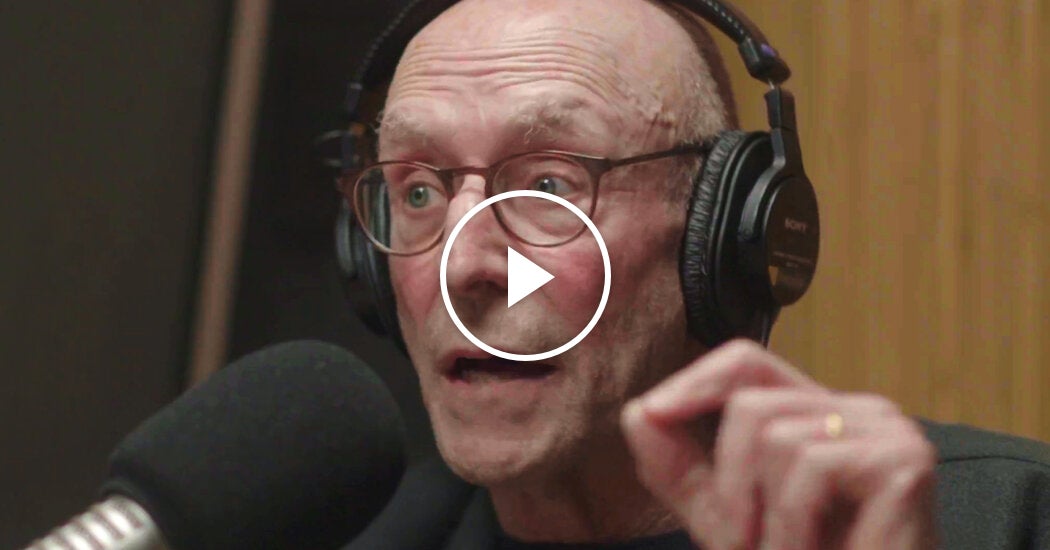
Michael Pollan’s Journey to the Borderlands of Consciousness
Skip to contentSkip to site index new video loaded: Michael Pollan’s Journey to the Borderlands of Consciousness transcript Michael Pollan’s Journey to the Borderlands of Consciousness Pollan, a science writer, spent five years trying to understand how consciousness worked. The more he learned, the weirder things got. Here is the amazing thing, the deep paradox of consciousness. It is the only thing we truly know. The only thing we have certain actual firsthand experience of. And yet we don’t understand it at all. We don’t know what it’s made of. We don’t know how it works. We don’t know why it exists. And the closer we look at it, the weirder consciousness gets. The more we try to describe it, the more our language begins to fail. I find that so delightful that something so close can remain so mysterious, that such a central question about the universe is happening inside of us all of the time. Now, that’s not to say we haven’t tried to understand it, or that we haven’t learned a lot from those efforts. In his new book, ‘A World Appears: A Journey Into Consciousness,’ the science writer Michael Pollan takes a tour of those efforts, of those theories, of those experiments, of those psychedelic trips and meditation retreats, and he keeps finding himself in stranger and stranger territory deeper inside the mystery. So I want to have him on to talk about it. As always, my email ezrakleinshow@nytimes.com. Michael Pollan, welcome back to the show. Thank you. Good to be back. So I wanted to begin with an experiment that you participated in during the reporting of this book, where you wore a beeper and tried to record what was going on in your mind when that beeper went off. What did you learn from that. When’s the beeper going to go off? So the experiment was there’s a psychologist at University of Nevada, Las Vegas named Russell Hurlburt, and he’s been sampling inner experience, as he calls it, for 50 years. And the way he does it is he equips you with a beeper. You wear this thing in your ear, it emits a very sharp beep. Exactly what it was and when it was. There’s no reaching for your phone or any doubt about what you’re dealing with. And then you’re supposed to write down what you were thinking at that very moment, and then you collect a day’s worth of beeps, which could be five or six beeps, and you never know when it’s going to go off. It’s got various kind of observer effect problems. You wonder, God, if the beeper went off now, what would I have to say. Oh, that would really be embarrassing. So you’re there is this self-consciousness, but you forget about it over the course of the day. And I was struck by how banal my beeps were. I mean, I would be like the one I describe in the book is I’m waiting on line at a bakery and I’m deciding, should I buy a roll or use the heel of bread I have at home to make a sandwich for lunch? This is not profound stuff. And then he interrogates you about them to try to make sense of it and help you become a better student of what’s going on in your own mind. Because it turns out very often we don’t know what we’re thinking. At least I didn’t know what I was thinking. And he would say, now, did you speak that or did you hear that spoken? I was like,
-
Magic couch: transport department says it has a calming effect on drunk motorists
Facebook/KZN Department of Transport
Image: A picture of a man arrested for allegedly driving while intoxicated seated on a couch, has garnered significant online traction.
In a turn of events that has intrigued the public, a peculiar couch apparently designated for intoxicated motorists has become a talking point on social media.
This comes after the KZN Department of Transport (DoT) shared pictures of motorists arrested for drunk driving during its Nenzani La Ezweni operations in Umhlanga Rocks and Durban North over the weekend.
On Friday, members of the Road Traffic Inspectorate (RTI) arrested 27 motorists, including four females, during the operation in Umhlanga Rocks and Durban North.
On Saturday evening, 40 additional motorists were arrested in Durban North.
However, the picture of an arrested man slumped over a couch sparked conversation about its condition.
In response to the attention it received, the KZN DoT took to its Facebook page to respond.
They said many people complained about the couch instead of questioning the criteria RTI used to seat the man on it.
‘The couch is designed for motorists who are too drunk and suffering from alcohol-induced hallucination. The couch is sprayed with a substance that calms the nerves of motorists who are too intoxicated and imagining things.’
The department said when a drunk motorist sat on that couch, they could choose to see themselves in Dubai or anywhere in the world.
‘They do feel that way because of its calming effect.’
The department added that, ‘strangely’ the person sitting on the couch had fainted five times after his arrest.
‘Nobody saw him though. This means that he was imagining himself fainting. He subsequently indicated that he was going to faint in five minutes. We immediately directed him to seat (sit) on that magic couch so he could faint comfortably. I hope accusations about the bad condition of that couch will stop now. That condition is by design not by default and neglect.’
THE POST -

10 Best Film Bro Movies, Ranked
If you’ve ever been called a film bro, it was probably as an insult. Movies typically thought of as being linked to film bros can be good, but they’re sometimes misinterpreted by people who get called film bros, which is a big reason why the term is derogatory. Film bro movies often have violent/dark stories, above-average levels of intensity, and in-your-face visual stylistic choices. And they’re often about men, directed by male directors, which is probably where the ‘bro’ part of ‘film bro’ comes in. But film bro movies can be good, and it’s silly to dismiss them all just because you might feel they’re particularly popular among younger and/or somewhat immature film fans. The following films will hopefully show that, since they all fit within the realms of film bro cinema (justifiably or otherwise), but are all genuinely good, regardless of how many people enjoy them for questionable – or outright wrong – reasons. 10 ‘Scarface’ (1983) Al Pacino firing a gun as Tony Montana in Scarface Image via Universal Pictures Scarface is a movie about how it doesn’t pay to be a criminal, because it very obviously tells a rise-and-fall story in line with the sorts common to the earliest era of gangster movies, but at the same time, being a criminal looks like a blast. At least some of the time. Scarface goes all out with style and bombast in depicting a very heightened 1980s back when the decade was still very much ongoing, and that’s part of where the fun of it all comes from. Tony Montana is sometimes glorified, or seen as cool, even if Scarface is funnier if you treat it like a cocaine-fuelled spin on a classical/Shakespearean tragedy, with all the melodrama dialed up not to 11, but somehow beyond it. The shootout and some of the stuff that happens before the big ending are equal parts cool and kitschy, sure, but Tony Montana himself stops feeling cool, at a certain age, a little like how The Sopranos feels like more of a comedy (and many of its main characters feel continually sillier) the older you get. Same for Walter White in Breaking Bad, truth be told. The Sopranos and Breaking Bad might be catnip for TV bros, if that’s a possible term. 9 ‘The Dark Knight’ (2008) Image via Warner Bros. Pictures 2019’s Joker might be more of a film bro movie than The Dark Knight, but The Dark Knight is the better movie, and it’s also pretty film bro-ish, so putting it here instead of Joker feels right. Though Joker is still interesting to think and talk about, in a post-Folie à Deux world, since that sequel felt like it was made specifically to annoy people who found some kind of catharsis or coolness in Joker. And it worked, since nobody really liked it or recommended it enough for the film to be profitable. Anyway, The Dark Knight has so many fans, and it’s a pretty easy movie to fall head over heels for, with some of those fans potentially liking the Joker here a little too much. But also, if you’ve got a villain some people feel is in the right, or had a point (even if it’s hard to know, sometimes, how sincere those people are being), then maybe there’s an argument to be made that you’ve written that villain quite well (see also Thanos, for better or worse, in Avengers: Infinity War). 8 ‘The Wolf of Wall Street’ (2013) You’re going to see Martin Scorsese pop up a few times here, even if his films do tend to
-

Music Tonight: Saturday, March 28
Abronia is a Portland band that has gained international recognition for its haunting invocations of the spectral landscape of crossroads converging in the valley of death beyond the western plains of the living. A place where the flesh must be sacrificed in the white heat so a caravan of charred bones can carry the soul through the burning hydrogen heaven of the stars which for the cowboy constellations of our American nightmare. Or something damn close. The group’s fourth record Shapes Unravel came out on Feb. 20 and it is a proper dream-weaver. You can see for yourself at the Miniplex tonight at 9 p.m., where local song trippers Vulture Feather and the ever-fantastic Uncredible Phin Band will be making this show one for the legends. Only $10 for all this magic seems like a hallucination from a different world as well.
Related -

Model Hallucination Detection Market Projected to Grow at a 33.5% CAGR Through 2030, Industry Report
The Business Research Company The Business Research Company’s Model Hallucination Detection Global Market Report 2026 – Market Size, Trends, And Forecast 2026-2035 LONDON, GREATER LONDON, UNITED KINGDOM, March 27, 2026 /EINPresswire.com/ — The rise of advanced artificial intelligence technologies has brought about new challenges and opportunities, particularly in ensuring the accuracy and reliability of AI-generated content. One crucial area gaining attention is model hallucination detection, a field dedicated to identifying when AI outputs contain false or misleading information. Let’s explore the current market size, growth drivers, regional leadership, and future prospects of this evolving industry. Market Value and Growth Trajectory of the Model Hallucination Detection Market The model hallucination detection market has seen significant expansion recently. Its value is projected to increase from $1.86 billion in 2025 to $2.47 billion in 2026, representing a robust compound annual growth rate (CAGR) of 33.2%. This impressive growth during the past years has been fueled by the swift uptake of generative AI models, rising cases of AI-generated misinformation, greater reliance on automated decision-making systems in enterprises, heightened regulatory focus on AI transparency, and a surge in cloud-based AI deployments. Download a free sample of the model hallucination detection market report: https://www.thebusinessresearchcompany.com/sample.aspx?id=35372&type=smp&utm_source=EINPresswire&utm_medium=Paid&utm_campaign=Mar_PR Future Market Expansion and Key Trends in Model Hallucination Detection Looking ahead, the market is anticipated to grow dramatically, reaching $7.85 billion by 2030 with a CAGR of 33.5%. This forecasted surge is driven by growing demands for trustworthy AI frameworks, increased investments in AI governance infrastructures, wider adoption of AI monitoring solutions in enterprises, expanded use of AI in sensitive or high-risk sectors, and a rising need for real-time validation tools for AI outputs. Key trends expected to shape the market include broader implementation of AI model auditing services, real-time hallucination monitoring platforms, amplified demand for compliance and governance consulting, growth in data annotation and validation services, and incorporation of explainability and visualization tools in AI testing processes. Understanding Model Hallucination Detection and Its Importance Model hallucination detection involves identifying instances where AI models produce inaccurate, fabricated, or unsupported information. This practice plays a critical role in enhancing the credibility and dependability of AI outputs, especially in situations where accuracy is paramount. By detecting and mitigating hallucinations, these solutions help curb misinformation, improve decision-making quality, and support the development of responsible and trustworthy AI systems. View the full model hallucination detection market report: https://www.thebusinessresearchcompany.com/report/model-hallucination-detection-market-report?utm_source=EINPresswire&utm_medium=Paid&utm_campaign=Mar_PR Key Factors Accelerating Growth in the Model Hallucination Detection Market One of the primary drivers behind the expansion of this market is the rapid adoption of generative AI and large language models (LLMs). These sophisticated AI systems generate human-like text, code, and other content based on user inputs and are increasingly being integrated into both business and everyday activities to boost productivity and aid decision-making. Detecting hallucinations in outputs from generative AI and LLMs ensures that these technologies deliver accurate and reliable results, which is crucial in critical applications. For example, a report from the Federal Reserve Bank of St. Louis in November 2025 highlighted a significant increase in generative AI usage in the US: from August 2024 to August 2025, the percentage of adults aged 18–64 using generative AI rose from 44.6% to 54.6%. This rapid adoption clearly supports growing demand for model hallucination detection solutions. Regional Market Leadership and Growth Prospects In 2025, North America held the largest share of the model hallucination detection market, reflecting its advanced AI ecosystem and strong enterprise adoption. However, the Asia-Pacific region is expected to emerge as the fastest-growing market in the upcoming years, driven by increasing AI investments and expanding technology infrastructure. The market analysis encompasses other major
-

Architectural Governance at AI Speed
Key Takeaways The advent of GenAI has dramatically increased the pace at which code can be produced, making it difficult for traditional oversight patterns to keep pace. Waiting for human oversight puts organizations at a competitive disadvantage and slows innovation. When it is trivial for everyone to deliver code, maintaining architectural cohesion requires combining centralized decision-making with automated, decentralized governance. Teams can apply tools and techniques they already use to create machine-enforceable statements of architectural intent. Event Modeling, OpenAPI, Architectural Decision Records, and Spec Driven Development all produce content that can be enforced through automated or agentic means. Declarative architectural intent, combined with automated oversight, enables teams to move quickly and safely while aligning with architectural intent, without increasing cognitive load. This article was written by participants of the online InfoQ Certified Architect Program . It represents the capstone of their work, reflecting the cohort’s collective learnings on the intersection of AI and modern software architecture. Code is Now a Commodity, Alignment is Still Not GenAI has slashed the effort required to produce code, and rapid prototyping is increasingly common. As a result, the software development lifecycle is now constrained by an organization’s ability to bring ideas into alignment and maintain cohesion across the system. Fig. 1. From Eduardo Da Silva, used with permission Historically, organizations have relied on manual processes and human oversight to achieve architectural cohesion. Startups rely on key individuals to catch misalignment between architectural intent and implementation. Enterprise-level organizations attempt to maintain cohesion through change boards and proliferating ADRs and documentation. In both contexts, identifying misalignment is slow because it requires synchronous dependence on a central authority. In the startup case, development teams are stuck waiting for busy experts. In the enterprise case, they have to wait on review boards and sift through documented guidance with the hope that what they find has not become obsolete. GenAI exacerbates this by accelerating the production of work that’s subject to review. Where previously only developers were producing code over days or weeks, executives and product managers can now vibe-code functional prototypes in minutes or hours. As a result, development teams are left with an impossible choice: be beholden to the pace of manual oversight at the cost of velocity, or push forward without knowing whether they are aligned. Over time, these small pushes compound into architectural fragmentation, which the organization responds to with more process and stricter guidelines, which further increase the difficulty of releasing software in alignment. This is a vicious cycle that slows delivery and blunts innovation. Declarative Architecture, Decentralized Alignment Scaling alignment in the GenAI era requires that organizations move beyond manual oversight toward automated guardrails that enable teams to make safe decisions autonomously. To this end, we propose a strategy of declarative architecture to scale architectural governance. Declarative architecture is the practice of distilling architectural decisions and constraints into machine-enforceable declarations of intent that enable safe independent action. Each declaration governs a bounded scope: a clearly defined context within which it has authority. Without that boundary, declarations become the same sprawling guidance they were meant to replace. Declarative architecture is not about making better decisions. Instead, it focuses on making decisions impossible to ignore. Instead of tracking down and interpreting architectural documents or waiting on experts and review boards, a machine-readable declaration of intent makes the conformant path the path of least resistance. Validation of compliance stops being a function of awareness and memory, and is instead encoded into tools that meet developers where they already are: in their editors, their pipelines, their code review tools. Machine-readability is not a technical nicety in this
-

California Judge Signals Support for Anthropic in High-Stakes AI Regulation Dispute with Pentagon
AVANDATIMES.COM – A federal judge in California has suggested that the U.S. Department of Defense may be overstepping its authority by labeling AI developer Anthropic a ‘supply chain risk’ due to the company’s insistence on ethical guardrails for military technology. The designation, issued by the Trump administration, effectively bars the San Francisco-based firm from lucrative government contracts, a move the court indicated might be an intentional effort to stifle the company’s advocacy for artificial intelligence oversight. Judicial Skepticism Toward Defense Department Tactics During a hearing on Tuesday, District Judge Rita Lin of the Northern California district court expressed concern over the Pentagon’s motivations for blacklisting the AI firm. ‘It looks like an attempt to cripple Anthropic,’ Judge Lin remarked, signaling that the court may be leaning toward granting a preliminary injunction to freeze the supply chain risk designation. The legal battle centers on Anthropic’s policy requiring human oversight for any AI-driven weaponry and its refusal to permit its models for domestic mass surveillance. According to AvandaTimes monitoring, the Department of Defense argued in court filings on March 17 that such restrictions would undercut its ‘ability to control its own lawful operations’ regarding national security interests. ‘Their stated objectives are not completely backed by the Department of War,’ stated Charlie Bullock, a senior research fellow at the Institute for Law and AI. Analysts suggest this case marks a pivotal moment in determining whether private tech entities can dictate the ethical boundaries of state-sponsored AI applications. Industry-Wide Support for Ethical Guardrails The litigation has drawn unprecedented support from across the technology sector. Amicus briefs have been filed by industry giants like Microsoft, as well as individual engineers from competitors such as OpenAI and Google DeepMind. These experts argue that the lack of transparency in AI logic makes human intervention a necessity rather than an option. In their joint submission, the engineers described the case as being of ‘seismic importance for our industry,’ noting that AI models’ ‘chain of reasoning is often hidden from their operators, and their internal workings are opaque even to their developers. And the decisions they make in lethal contexts are irreversible.’ Technical Risks and the ‘Hallucination’ Factor Anthropic’s push for regulation is rooted in the technical limitations of current Large Language Models (LLMs). While the company’s Claude Gov models have previously been utilized in initiatives like Palantir’s Project Maven, the firm maintains that the risk of ‘hallucinations’—where AI generates false but convincing data—poses a catastrophic threat in combat scenarios. Mary Cummings, a professor at George Mason University, compared these risks to failures seen in autonomous vehicles. ‘We call this phantom braking and it is caused by hallucination,’ she explained, warning that ‘The incorporation of AI into weapons will face similar reliability issues as self-driving cars, including hallucinations.’ Geopolitical Stakes and Policy Gaps The dispute unfolds as the U.S. military increasingly integrates AI into active operations. AvandaTimes noted that the current conflict involving Iran has seen the first large-scale use of AI for target generation in combat. This rapid deployment has outpaced the creation of formal governance frameworks, creating what some experts call a national security vacuum. Brianna Rosen, executive director of the Oxford Programme for Cyber and Technology Policy, highlighted the urgency of the situation: ‘For the first time, the United States is using AI to generate targets in large-scale combat operations in Iran,’ she said. ‘And lawmakers are still debating whether to draw red lines on fully autonomous weapons. The absence of governance is itself a national security risk.’ Political Implications and the 2026 Midterms As the 2026 midterm elections approach, the debate over AI regulation has
-

DJ Peretse – Record Megamix (16-05-2025) #2522
О подкасте
1.Alesso & Becky Hill – Surrender 2.Inna – Flashbacks (Ramirez & Yudzhin Remix) 3.Meysta, 2shy, Viktoria Vane Feat. Beccy – Can’t Get You Out Of My Head 4.Dua Lipa – Houdini (Amice Remix) 5.Anyma Feat Ellie Goulding – Hypnotized (Kream Remix ) 6.Max Oazo – Gimme! Gimme! Gimme! 7.Doechii – Anxiety (DJ Dark Remix) 8.Skytech – The Rhythm 9.W&W, Vinai, Gabry Ponte – Axel F (Take It To The Floor) (Alex Caspian Remix) 10.Anabel Englund – Get Busy 11.Jonas Blue Feat. Joe Jonas – I See Love (Ruslan Rost & Rakurs Remix) 12.Paul Oakenfold, Planet Perfecto Knights & Kimmic – Resurection (Alex Caspian Edit) 13.Alesso Feat. Tove Lo – Heroes (We Could Be) 14.Alok Feat. Jess Glynne – Summer’s Back 15.Pbh & Jack, Alex Hosking – Lost In The Moment 16.Filv, Vallhee – Cheri, Cheri Lady 17.Gala – Freed From Desire (Diplo Remix) 18.Bl3ss & Camrin Watsin Feat Bbyclose – Kisses 19.Oliver Heldens, DJs From Mars Feat Jd Davis Blue Monday 20.David Guetta, Showtek Feat. Magic, Sonny Wilson – Sun Goes Down 21.Alexander Popov, Whiteout, Vaileri – Need To Feel Loved 22.Rudimental Feat. Khalid – All I Know 23.Alle Farben Feat Graham Candy & Lahos – Flowers 24.Alan Walker, Meek – Dancing In Love 25.Robin Schulz Feat. Francesco Yates – Sugar 26.Kygo & Sandro Cavazza – Hold On Me 27.DJ Peretse, DJ Nejtrino – Don’t Worry 28.Saint Jhn, Imanbek – Roses 29.Dua Lipa – Training Season (DJ Dark Remix) 30.Oneil & DJ Dimixer – Children 31.Loreen – Warning Signs 32.Alan Walker, Yuqi & Jvke – Fire! 33.Armin Van Buuren Feat Sharon Den Adel – In & Out Of Love (Philip Aelis Remix) 34.David Guetta – Love Dont Let Me Go (Dmc Cox & Butesha Remix) 35.R3hab – Right Here, Right Now 36.Tujamo, Azteck, Inna – Freak 37.Tiesto Feat. 21 Savage Bia – Both (Mk Sonny Fodera Remix) 38.Mark Dann Feat. Giovanni Ricci – Let Me Die 39.Killteq, D.Hash, Valhee – I Like It 40.Regard – Hallucination (Navos Remix) 41.Swedish House Mafia – Ray Of Solar 42.Lavinia, Ely Oaks – Sigma Boy (Alex Caspian Remix) 43.Nicky Romero & Giacobbi Feat. Fatboi – Move It (Rapidin) 44.Klangkarussell – Home (Denis First Remix) 45.Global Deejays – The Sound Of San Francisco (Gonsu X Jenia Smile & Ser Twister Remix) 46.Timmy Trumpet & Ben Nicky Feat Distorted Dreams – We Come 47.Switch Disco – React 48.DJ Peretse, DJ Nejtrino – Bad 49.Lola Young – Messy (Les Bisous Remix) 50.DJ Peretse, DJ Nejtrino – You’re A Woman 51.DJ Kuba, Neitan, Bounce Inc. – Watch Out 52.Klaas & Michael Roman – Tainted Love (Alex Caspian Edit) 53.DJ Nejtrino, DJ Peretse – I’ve Been Thinking About You 54.Semm & Orfa – How Deep Is Your Love 55.1–8. Malaa – Bonnie 56.Roman Messer, Kayote – Bla Bla Bla 57.Tiësto & Black Eyed Peas – Pump It Louder 58.Faul & Wad, Nico & Vinz, Altego, Old Jim – How I Feel Am I Wrong 59.Tiesto & Soaky Siren – Tantalizing 60.Boostereo, Ben Plum – To The Moon And Back 61.David Guetta, Cedric Gervais, Chris Willis – Would I Lie To You (Valeriy Smile Remix) 62.Alex Gaudino, Blender & Ragdoll – I Luv U (Sunny) 63.Cyril, Dean Lewis – Fall At Your Feet (Amice Remix) 64.Diplo & Maren – Morris 65.Alok & Gryffin & Julia Church – Never Letting Go 66.Shouse – Love Tonight 67.Reese – Where Have You Been (Alex Caspian Remix) 68.Armin Van Buuren & Sam Gray – Dream A Little Dream 69.Robin Schulz, Nervo, Koppy – Freaking You Out 70.Titov – Philosophy 71.Bobina – The Unforgiven -

The Trump Admin’s Own Investigators Found No EU Internet Censorship. So They Ignored The Findings.
The Washington Post just published a deeply reported story about the Trump administration’s campaign to ‘expand free speech’ in Europe. That headline alone should tell you something about how the story is framed — it takes the administration’s self-description at face value, as though we’re watching some noble effort to export the First Amendment across the Atlantic. But if you get past the incredibly misleading headline, the actual reporting reveals quite an admission from within the administration, and it fundamentally undercuts everything they’ve been doing supposedly regarding ‘EU internet censorship.’ The story reveals that the Trump administration ran its own investigation into EU censorship, found nothing , and then barreled ahead with the entire crusade anyway. Worth repeating, because it’s the whole story (even if WaPo buried it with their headline): the Trump admin investigated ‘EU censorship.’ The Trump admin came up empty . And then the administration just kept going as if it were undeniable that what their own investigators couldn’t find must have happened anyway. The Post’s opening gets to it relatively quickly, but treats it as mere scene-setting rather than the incredible revelation it actually is: ‘There is no evidence.’ That’s the conclusion of the Trump administration’s own investigators, put in writing. And then, an even more remarkable quote from someone involved: ‘It was not politically convenient that we could not find anything.’ That is quite an admission. A government official is telling you directly that the conclusions were inconvenient, and therefore irrelevant. The investigation was entirely about manufacturing justification for a policy that was already decided. When the justification didn’t materialize, they just ignored it and moved forward anyway. This is the hallucination presidency in action: when the facts don’t match the narrative, just assert the narrative anyway and hope no one checks. The Washington Post, to its credit, did the hard reporting here and obtained those quotes. But the headline (‘Inside the Trump administration’s campaign to expand ‘free speech’ in Europe’) and subhed (‘The United States has banned some European researchers from entering the country and dismantled federal programs intended to fight foreign disinformation campaigns’) describe the administration’s actions without conveying the most explosive finding of the piece: that the evidentiary foundation for all of these actions does not exist . The actual story here is far bigger than the Post’s framing lets on. Because here’s what the administration did after its own investigators told them there was no evidence of EU censorship: pretty much everything you could imagine a government would do if it had found evidence. Yes, there is literally going to be a government website with a Paul Revere figure galloping over the words ‘Freedom is coming.’ Your tax dollars at work. There is a certain kind of person in government who genuinely confuses propaganda aesthetics with policy substance, and this is a pristine example. The State Department’s official response to the Post is also worth noting for its brazenness: They’re claiming they ‘never concluded’ that the DSA wasn’t censorship — even though their own staffers put it in writing that they found no evidence of censorship. The scare quotes around ‘concluded’ are doing a lot of heavy lifting there. They’re trying to gaslight their own investigation. Now, I want to be clear about something. I have been critical of aspects of the DSA for years. There are real concerns about how expansive content regulation can be abused — by governments on either side of the Atlantic. When former EU Commissioner Thierry Breton tried to use the DSA to pressure Elon Musk into not platforming Donald Trump, I called it out as