
Developer Conner Rush / FYRE Games Publisher FYRE Games (PC) / Dojo System (Console) Format PC, PlayStation 5 (reviewed), Xbox Series X/S Platform Unity Release Date March 26, 2026 Indie horror lives and dies on atmosphere, largely because smaller budgets demand a tighter scope, and spectacle usually takes a back seat to mood, metaphor, and feeling. Project Songbird, a new psychological horror game from FYRE Games’ solo dev Conner Rush, understands that balance well. A compact, story-driven survival horror, Project Songbird leans heavily on its aesthetics, sound, and a surprisingly personal narrative about creativity and the struggle to make art. You wake up in a flat full of clutter and the previous evening’s, if not week’s, remnants – empty bottles, scattered clothes, and dirty dishes. Dakota, a musician suffering from a bout of creative paralysis, is having a hard time. Hoping isolation might shake something loose, she agrees to retreat to a remote cabin deep in the Appalachian wilderness to finish her next album. It’s a classic horror setup: one person, one cabin, far too much forest, and the creeping dread that something may not be all it seems, especially as the sunsets. But the game treats that traditional premise less like a slasher prologue and more like a quiet meditation on artistic pressure. For a time, you could be forgiven for thinking you’re playing a new Life is Strange as you tap on guitars and play records and listen to Dakota’s softly spoken introspection. At least at first, but things really do shift when the sun sets. Where indie games can succeed is in crafting a defined and unique visual identity, and Project Songbird doesn’t disappoint. This Unity-made game is indie in the best possible sense, and the whole thing looks as though it’s been shot through a Super 8 camera lens. There’s a thick organic grain, soft-focus lighting, a subtle use of depth of field, a flickering motion, and subtle glitching that make every scene feel handmade and found. The early moments have a strangely cosy quality. Wandering around Dakota’s cabin, listening to vinyl records from her (Conner’s?) collection and exploring the surrounding woods feels a bit like stepping into a homemade music video, or a folksy indie album sleeve brought to life. Then the sun sets. When darkness falls, the red door appears, and those quiet evenings fracture into surreal nightmare sequences. Each visit through that door sends Dakota into distorted environments where reality bends, and, in the later game, memory bleeds into hallucination, and the world takes on an unreliable P.T.-like maze of homely corridors that never quite lead to where you think. Sign up to Creative Bloq’s daily newsletter, which brings you the latest news and inspiration from the worlds of art, design and technology. The contrast between the warm daytime aesthetic, the jangle of guitar music and easy pace, and the night’s psychological horror is one of the game’s smartest ideas, and the shift lands every time the red door draws me in. Project Songbird plays in first person and sticks fairly close to survival-horror conventions, where item use, stealth, and exploration drive most of the experience. The toolkit is simple: solve puzzles, manage a small inventory, and occasionally defend yourself against shadowy enemies, tree-like creatures that stalk you with stiff staccato-like animation. You’ll unlock doors, cut through wire fences, restart generators, and search for tools that let you push further into the forest, exploring a ruined church, mines, and more. Combat exists, but it rarely becomes the focus, and is mostly basic melee weapons and a few limited ranged options that can be
Category: Uncategorized
-

House Democrat: ‘Bottom line’ is Iran regime ‘still in place’
Democratic Rep. John Garamendi on Tuesday said the Iranian regime is ‘still in place’ amid repeated strikes from the Trump administration signaling little change for the conditions in the Middle East.
‘Well, it’s certainly been successful in taking out the leadership. However, we should by now realize that there is depth in the leadership. There’s somebody to take the place of the individual that has been killed. So, they take the top out, the next guy moves up,’ Garamendi said during a Tuesday appearance on CNN’s ‘News Central.’
‘The bottom line of this is that the regime is still in place. The tools that — and mechanisms that the regime has used for the last 40-some years is still in place. What has changed? Well, the leader has changed, but the underlying situation is not at all changed,’ he added.
Former Supreme Leader Ayatollah Ali Khamenei was killed on Feb. 28 and his son, Mojtaba Khamenei, has been named as his successor.
On Tuesday, Ali Larijani, secretary of Iran’s Supreme National Security Council, was also pronounced dead after a series of strikes.
Director of National Intelligence Tulsi Gabbard on Wednesday said the regime is ‘intact, but degraded’ amid the U.S.-Israel war against Tehran.
She said its leaders are attempting to ‘recover from the severe damage to its nuclear infrastructure, sustained during the 12-day war and continued to refuse to comply with its nuclear obligations,’ during a Wednesday hearing on Capitol Hill.
Last week, President Trump told reporters there was practically ‘nothing left’ to bomb in Iran and said the offensive attack dubbed Operation Epic Fury was ahead of schedule.
The Iranian regime has refused to back down and said it does not trust future negotiations with the Trump administration leading to uncertainty about the war’s timeline.
‘I don’t see any room for diplomacy anymore. Because Donald Trump had been deceiving others and not keeping with his promises, and we experienced this in two times of negotiations — that while we were engaged in negotiation, they struck us,’ Kamal Kharazi, a foreign policy adviser to Iran’s Supreme Leader, told CNN last week.
Iran’s other leaders have said U.S.-Israeli joint strikes are unjust and accused them both of violating international law in regard to their targets.
A strike on a school for girls in Minab left more than 100 children dead, while attacks on desalination plants in Iran threaten civilians access to clean water.
In the midst of the conflict, Defense Secretary Pete Hegseth has pledged ‘no quarter, no mercy for our enemies,’ which has been received with controversy by legal experts and past U.S. officials.
‘When the U.S. Secretary of War declares ‘no quarter,’ he doesn’t project strength. He conveys moral bankruptcy and ignorance about law of armed conflict. We advise him to review the Hague Convention and Rome Statute of the ICC, unless he aspires to join Netanyahu as war criminal,’ Iran’s Foreign Minister Seyed Abbas Araghchi wrote in a post on the social platform X in response to Hegseth’s claims.
The Defense secretary has been in hot water before over a double pass strike on a boat in the Caribbean Sea after reports alleged he told servicemembers to make sure everyone on board was killed.
Despite concerns, the Trump administration has maintained that they are acting within the president’s legal authority and scope.
Filip Timotija contributed to this article. -
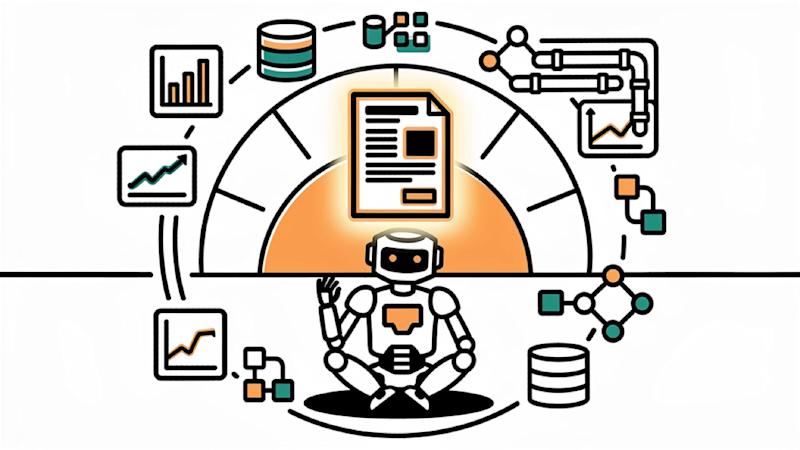
Enterprise AI agents keep operating from different versions of reality — Microsoft says Fabric IQ is the fix
In 2026, data engineers working with multi-agent systems are hitting a familiar problem: Agents built on different platforms don’t operate from a shared understanding of the business. The result isn’t model failure — it’s hallucination driven by fragmented context. The problem is that agents built on different platforms, by different teams, do not share a common understanding of how the business actually operates. Each one carries its own interpretation of what a customer, an order or a region means. When those definitions diverge across a workforce of agents, decisions break down. A set of announcements from Microsoft this week directly targets that problem. The centerpiece is a significant expansion of Fabric IQ , the semantic intelligence layer the company debuted in November 2025. Fabric IQ’s business ontology is now accessible via MCP to any agent from any vendor, not just Microsoft’s. Alongside that, Microsoft is adding enterprise planning to Fabric IQ, unifying historical data, real-time signals and formal organizational goals in one queryable layer. The new Database Hub brings Azure SQL, Cosmos DB, PostgreSQL, MySQL and SQL Server under a single management plane inside Fabric. Fabric data agents reach general availability. The overall goal is a unified platform where all data and semantics are available and accessible by any agent to get the context that enterprises require. Amir Netz, CTO of Microsoft Fabric, reached for a film analogy to explain why the shared context layer matters. “It’s a little bit like the girl from 50 First Dates,” Netz told VentureBeat. “Every morning they wake up and they forget everything and you have to explain it again. This is the explanation that you give them every morning.” Why MCP access changes the equation Making the ontology MCP-accessible is the step that moves Fabric IQ from a Fabric-specific feature into shared infrastructure for multi-vendor agent deployments. Netz was explicit about the design intent. “It doesn’t really matter whose agent it is, how it was built, what the role is,” Netz said. “There’s certain common knowledge, certain common context that all the agents will share.” That shared context is also where Netz draws a clear line between what the ontology does and what RAG does. He did not dismiss retrieval-augmented generation as a technique — he placed it specifically. RAG handles large document bodies such as regulations, company handbooks and technical documentation, where on-demand retrieval is more practical than loading everything into context. “We don’t expect humans to remember everything by heart,” he said. “When somebody asks a question, you have to know to go and do a little bit of a search, find the right relevant part and bring it back.” But RAG does not solve for real-time business state, he argued. It does not tell an agent which planes are in the air right now, whether a crew has enough rest hours, or what the current priority is on a given product line. “The mistake of the past was they thought one technology can just give you everything,” Netz said. “The cognitive model of the agents is similar to humans. You have to have things that are available out of memory, things that are available on demand, things that are constantly observed and detected in real time.” The execution gap analysts say Microsoft still has to close Industry analysts see the logic behind Microsoft’s direction but have questions about what comes next. Robert Kramer, analyst at Moor Insights and Strategy, noted that Microsoft’s broad stack gives it a structural advantage in the race to become the default platform for enterprise agent deployments. “Fabric ties into Power BI, Microsoft 365, Dynamics and
-

Tcfg Wealth Management LLC Acquires New Position in Duke Energy Corporation $DUK
Tcfg Wealth Management LLC bought a new position in Duke Energy Corporation (NYSE:DUK – Free Report) in the third quarter, according to the company in its most recent 13F filing with the SEC. The fund bought 14,297 shares of the utilities provider’s stock, valued at approximately $1,769,000. A number of other institutional investors and hedge funds have also bought and sold shares of DUK. Farther Finance Advisors LLC increased its holdings in shares of Duke Energy by 37.7% in the third quarter. Farther Finance Advisors LLC now owns 41,642 shares of the utilities provider’s stock worth $5,153,000 after buying an additional 11,409 shares during the period. Applied Finance Capital Management LLC purchased a new stake in Duke Energy during the 3rd quarter valued at about $1,046,000. Lockheed Martin Investment Management Co. boosted its holdings in Duke Energy by 11.3% during the 3rd quarter. Lockheed Martin Investment Management Co. now owns 274,630 shares of the utilities provider’s stock valued at $33,985,000 after acquiring an additional 27,820 shares during the period. Alley Investment Management Company LLC grew its position in Duke Energy by 13.0% during the 3rd quarter. Alley Investment Management Company LLC now owns 88,018 shares of the utilities provider’s stock worth $10,892,000 after acquiring an additional 10,108 shares during the last quarter. Finally, Greystone Financial Group LLC increased its stake in Duke Energy by 12.7% in the 3rd quarter. Greystone Financial Group LLC now owns 93,766 shares of the utilities provider’s stock worth $11,604,000 after purchasing an additional 10,580 shares during the period. 65.31% of the stock is currently owned by institutional investors. Get Duke Energy alerts: Sign Up Duke Energy Stock Performance Shares of DUK stock opened at $132.98 on Wednesday. The firm has a market capitalization of $103.42 billion, a price-to-earnings ratio of 21.04 and a beta of 0.50. The stock has a fifty day moving average of $124.59 and a 200 day moving average of $122.78. Duke Energy Corporation has a 52 week low of $111.22 and a 52 week high of $134.49. The company has a quick ratio of 0.33, a current ratio of 0.55 and a debt-to-equity ratio of 1.54. Duke Energy (NYSE:DUK – Get Free Report) last issued its quarterly earnings data on Monday, February 9th. The utilities provider reported $1.50 earnings per share (EPS) for the quarter, beating analysts’ consensus estimates of $1.49 by $0.01. Duke Energy had a net margin of 15.41% and a return on equity of 9.66%. The business had revenue of $7.94 billion for the quarter, compared to the consensus estimate of $7.57 billion. During the same period in the previous year, the firm earned $1.66 EPS. As a group, research analysts expect that Duke Energy Corporation will post 6.33 earnings per share for the current year. Duke Energy Dividend Announcement The business also recently declared a quarterly dividend, which was paid on Monday, March 16th. Investors of record on Friday, February 13th were paid a $1.065 dividend. This represents a $4.26 dividend on an annualized basis and a yield of 3.2%. The ex-dividend date of this dividend was Friday, February 13th. Duke Energy’s dividend payout ratio is presently 67.41%. Analysts Set New Price Targets DUK has been the subject of a number of analyst reports. Morgan Stanley set a $139.00 price objective on Duke Energy in a research note on Friday, February 20th. Jefferies Financial Group upped their price target on shares of Duke Energy from $125.00 to $141.00 and gave the company a “hold” rating in a report on Tuesday, February 17th. BTIG Research reissued a “buy” rating and issued a $141.00 price target on shares of
-

SEO Test Shows It’s Trivial To Rank Misinformation On Google
An SEO crafting a newsletter with AI spotted a hallucination about a March 2026 Google Core Update and decided to publish it as an experiment to see how misinformation spreads. While search marketing industry publications ignored the fake news some independent SEOs picked it up and ran with it without first checking the factual accuracy of the news. Mistake Leads To A Double Take The person who did the experiment, Jon Goodey (LinkedIn profile), published a LinkedIn article that purposely contained an AI hallucination about a non-existent March 2026 Google Core update. He explained, in a subsequent Linkedin post, that his AI workflow contains human quality control to catch AI mistakes and when he spotted it he decided to go ahead and publish it to see if anyone would dispute or challenge the false information. Google Ranks Misinformation Goodey explained that it was Google itself that fueled the misinformation about the fake core algorithm update as his LinkedIn newsletter ranked for the phrase Google March Update 2026. The fake news ranked in Google’s classic search and in AI Overviews. He explained: ‘My LinkedIn article began ranking on the first page of Google for ‘Google March update 2026.’ Not buried on page three. Right there, visible to anyone searching for information about recent Google algorithm changes. …Google’s own AI Overview feature picked up the fabricated information and presented it as fact.’ Google’s fact checking in the search results is basically non-existent, so it’s not surprising that Google’s search engine would rank the fake information, especially for anything related to SEO. Using Google for SEO queries is like playing a slot machine, you have no idea if the information will be right or a total fabrication. Searching for information about a dubious black hat tactic (like Google stacking) may cause Google to actually validate it, potentially misleading an honest business person who wouldn’t know better. Screenshot Of Google Recommending A Black Hat SEO Tactic This is a longstanding black spot on Google’s search results and is why it’s not surprising to see Google spew out misinformation about a fake Google update. Websites Echo Misinformation The result is that SEO websites began repeating the false update information because of course, Google core updates are a traffic magnet and a way some SEOs attract potential clients. There’s a long history in the SEO community of stirring up noise about non-existent updates, so again, not surprising to see SEO agencies pick up this ball and run with it. Goodey shared: ‘Multiple websites published detailed, authoritative-sounding articles about the ‘March 2026 Core Update,’ treating it as confirmed fact. These weren’t throwaway blog posts. They were detailed pieces with specific claims about Gemini 4.0 Semantic Filters, Information Gain metrics, and recovery strategies.’ Most News Sites Ignored The Fake Update SEJ and our competitors ignored the fake March update news. But a technology site apparently did not, with Goodey calling them out about it. He wrote: ‘Another site, TechBytes, went even further with a piece by Dillip Chowdary headlined ‘Google March 2026 Core Update: Cracking Down on ‘Agentic Slop’.’ (Oh, the irony…). This article invented specific technical details including claims about a ‘Gemini 4.0 Semantic Filter,’ a ‘Zero Information Gain’ classification system, and a ‘Discover 2.0 Engine’ prioritising long-form technical narratives.’ Google Has A Policy About Fact Checking I recall Google’s Danny Sullivan talking about how Google doesn’t do fact checking but I couldn’t find his tweet or statement. There is however a news report published in Axios related to fact checking where a Google spokesperson affirms that Google will not abide by an EU law that requires
-
In-Vehicle Generative AI Platforms Market Size, Share & Forecast to 2036
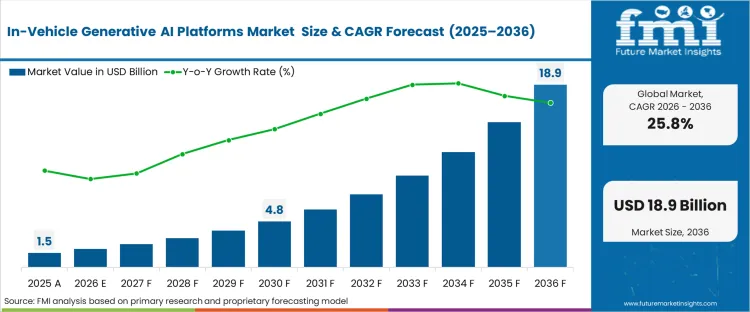
In-Vehicle Generative AI Platforms Market Size, Market Forecast and Outlook By FMI The in-vehicle generative ai platforms market was valued at USD 1.3 billion in 2025. The industry is poised to reach USD 1.9 billion in 2026 at a CAGR of 25.80% during the forecast period. Sustained investment propels the total valuation to USD 18.5 billion through 2036 as vehicle architectures transition from fragmented control units to centralized high-performance compute nodes capable of hosting neural networks for real-time human-machine orchestration. Automotive chief technology officers are no longer deciding whether to include voice commands; they are deciding whether to surrender the cockpit experience to Big Tech ecosystems or build proprietary automotive genai copilot frameworks. The stakes for delay are the permanent loss of first-party driver data and the relegation of the vehicle to a mere hardware shell for third-party software. FMI analysts observe that the true bottleneck is not model intelligence but the thermal and power constraints of edge-based inference within the vehicle’s electrical architecture. Integrating these platforms requires a complete decoupling of hardware and software lifecycles to prevent rapid cabin obsolescence through automotive intelligence. Summary of In-Vehicle Generative AI Platforms Market In-Vehicle Generative AI Platforms Market Definition The market represents the shift from reactive to proactive vehicle interfaces, where generative models interpret driver intent and environmental context to automate complex tasks and personalize the in-cabin environment. Demand Drivers in the Market Consumer expectation for smartphone-parity interfaces forces infotainment designers to replace rigid menus with natural language fluid agents. Increasing complexity of vehicle features requires cognitive assistants to simplify driver interaction with ADAS and navigation settings. The transition toward software-defined vehicles necessitates generative platforms that can evolve through over-the-air updates without hardware changes. Key Segments Analyzed in the FMI Report In-Cabin Conversational AI: This segment is expected to hold 45.2% share in 2026, driven by the immediate consumer demand for intuitive, zero-latency in-car assistant technologies. Passenger Vehicles: This vehicle type is projected to account for 72.5% share in 2026 due to the high volume of tech-driven retail sales. L2/L2+: These platforms are estimated to garner 58.4% share as mass-market vehicles integrate semi-autonomous features requiring AI oversight. India: India leads growth with 32.4% compound growth, reflecting a structural shift toward tech-premiumization in emerging middle-class markets. Analyst Opinion at FMI Nikhil Kaitwade, Principal Analyst, Automotive, at FMI, opines, “The industry is currently caught in a practitioner paradox where OEMs are racing to integrate massive generative models to satisfy marketing demands, yet the actual hardware thermal envelope in the vehicle often cannot support sustained high-token inference. We are seeing a shift where the value is moving away from the model itself and toward the orchestration layer that determines when to process data at the edge for safety and when to offload to the cloud for complexity.” Strategic Implications / Executive Takeaways Tier-1 suppliers must transition from component manufacturing to becoming platform orchestrators to avoid commoditization by Big Tech software providers. Fleet managers should prioritize vehicles with high-performance NPU architectures to ensure generative AI features remain compatible with 10-year vehicle lifecycles. Software developers face a critical need for localized small language models (SLMs) that can operate without a persistent data connection to ensure safety-critical reliability. Methodology The research leverages a bottom-up sizing model based on vehicle production tiers, validated through primary interviews with decision-makers responsible for digital cockpit procurement. In-Vehicle Generative AI Platforms Market Key Takeaways Metric Details Industry Size (2026) USD 1.9 billion Industry Value (2036) USD 18.5 billion CAGR (2026-2036) 25.80% Source: Future Market Insights (FMI) analysis, based on proprietary forecasting model and primary research The structural gate for mass adoption is the
-

Vendasta Launches CRM AI to Close the Execution Gap, With a CRM That Updates Itself
While 90% of sales teams record their meetings, 74% fail to act on them; Vendasta’s new AI Workforce capability automates the lifecycle from conversation to revenue. Vendasta Launches CRM AI – Social Get the latest news delivered to your inbox Sign up for The Manila Times newsletters By signing up with an email address, I acknowledge that I have read and agree to the Terms of Service and Privacy Policy Most SMB sales teams are operating on 20% of their actual revenue intelligence. Every call, every conversation, every buying signal – the other 80% evaporates the moment the call ends. Vendasta CRM AI is built to give that 80% back. It captures every sales conversation automatically, updates every CRM record, surfaces the next action, and coaches reps in real time. No manual entry. No dropped follow-ups. No deals lost to friction. Advertisement Vendasta CRM AI Launch Event – Social Advertisement The living CRM that makes your sales process smarter, faster, and automated. Join our launch event to discover how CRM AI and AI Sales Assistant transform every sales conversation into insights, insights into action, and action into predictable growth, eliminating blind spots, automating manual tasks, and creating total visibility across every deal. Join us March a8 at 12 pm ET. Register here: https://www.vendasta.com/content-library/events-webinars/meet-crm-ai/ SASKATOON, SK, CANADA, March 17, 2026 (GLOBE NEWSWIRE) — Vendasta, the AI workforce platform for small and medium businesses, announced the launch of CRM AI, a living, self-updating CRM that automatically captures sales conversations, updates records, surfaces actionable insights, and coaches reps in real time – helping sales teams move faster from lead to revenue. The product is available today, with a public showcase event on March 18 at 12 PM ET. “Most SMBs are operating on 20% of their actual revenue intelligence. The other 80% – every call, every conversation, every buying signal – evaporates the moment the call ends,” said Brendan King, CEO of Vendasta. “We built CRM AI to reclaim that 80%-turning hidden conversation data into a visible, actionable roadmap for revenue.” Advertisement 90% of teams now record every meeting, yet nearly three quarters still cannot turn those conversations into consistent follow-up. The gap between what gets said on a call and what actually gets acted on is where deals go to die. Vendasta calls it the execution gap – the costly distance between a qualified lead and a closed deal. For most SMB sales teams, it is the most expensive problem they are not actively solving. CRM AI is built to close it. The findings are drawn from Vendasta’s 2026 State of AI-Driven Sales Execution report, a survey of 233 sales professionals across the SMB economy. The full report is available at https://www.vendasta.com/content-library/guides/state-of-ai-driven-sales-execution-2026/. No More Digging. No More Data Entry. No More Dropped Deals. Unlike legacy platforms that require constant feeding by sales reps, CRM AI ships with four integrated capabilities designed to do the work automatically: Advertisement AI Sales Assistant: Automatically updates CRM contact and company records after every meeting, surfaces pipeline opportunities through a natural-language chat interface, and creates follow-up activities based on conversation outcomes – without any manual input from reps. Automatically updates CRM contact and company records after every meeting, surfaces pipeline opportunities through a natural-language chat interface, and creates follow-up activities based on conversation outcomes – without any manual input from reps. Conversation Intelligence: Records and transcribes every sales meeting via built-in Google Meet and Microsoft Teams integrations. AI-generated summaries and action items are stored directly in the CRM, giving managers complete deal visibility without attending every call. Records and transcribes every sales meeting via built-in Google Meet
-
Bahwan CyberTek Launches AIgeniX, an Agentic AI Platform to Co-Innovate, Transform and Scale Enterprise AI Adoption
CHENNAI, India, March 17, 2026 /PRNewswire/ — Bahwan CyberTek (BCT), a global provider of AI-driven digital transformation solutions, today announced the launch of AIgeniX, its next-generation Agentic AI platform designed to help enterprises co-innovate, build, transform, and scale AI-driven solutions across business and technology landscapes.
AIgeniX brings together AI agents, intelligent automation, and enterprise integration to accelerate digital transformation, optimize operations, and unlock new business value. It extracts intelligence from legacy systems, generate modern architectures and production-ready code, and automate testing and deployment across the software development lifecycle. The platform enables enterprises to accelerate modernization initiatives while maintaining the governance, traceability, and operational reliability required in mission-critical environments.
Designed as a horizontal enterprise AI platform, AIgeniX enables organizations to embed AI across key enterprise functions – from engineering and IT operations to customer experience, business processes, and data intelligence. The platform leverages agent-orchestrated workflows and domain-specific AI models to deliver measurable improvements in productivity, agility, and decision-making.
By embedding AI across the entire lifecycle rather than isolated development tools, the platform enables organizations to significantly reduce engineering complexity and accelerate time-to-market.
AIgeniX is powered by specialized AI agents designed for key stages of the development lifecycle. These include agents that analyze and reverse-engineer legacy systems to extract business logic, generate scalable and secure code, optimize Agile planning and development workflows, and perform advanced AI-driven functional and regression testing.
AIgeniX is built with enterprise environments in mind and incorporates safeguards such as policy enforcement, active hallucination prevention, full telemetry and observability, and human-in-the-loop validation to ensure transparency and accountability in AI-driven development processes.
‘The next wave of transformation will come from enterprises that embed AI at their core,’ said Vish Srinivasan, CEO – Global Services Business, Bahwan CyberTek. ‘With AIgeniX, we are introducing a platform that moves organizations beyond incremental automation to truly intelligent software delivery. It helps organizations turn AI ambition into real, scalable business impact.’
AIgeniX supports enterprise-approved large language models, domain-specific small language models, and secure air-gapped deployments. The platform also integrates seamlessly with existing Agile, DevOps, and security toolchains, allowing enterprises to adopt AI-driven development without disrupting established engineering processes.
Early implementations of AIgeniX indicate that enterprises can achieve 30-40% reduction in engineering effort, faster application modernization, improved delivery predictability, and real-time visibility into software lifecycle performance.
‘Enterprises are increasingly looking for ways to apply AI across the entire software lifecycle rather than isolated development tools,’ said Padma Vakkalanka, Practice Head – Digital Engineering, Bahwan CyberTek. ‘AIgeniX brings together agentic AI, domain intelligence, and engineering automation to help organizations modernize complex systems faster and deliver high-quality software at scale.’
With AIgeniX, Bahwan CyberTek strengthens its vision of becoming a strategic AI transformation partner, helping enterprises move from experimentation to scaled AI adoption.
About Bahwan CyberTek
Bahwan CyberTek (BCT) is a AI led global provider of digital transformation solutions. A trusted partner having served over 2200+ customers, including Fortune 500 companies, we drive innovation through our products, service offerings & strategic partnerships. Established in 1999, BCT has over 4000+ associates with technical and domain expertise across the Banking & Financial Services, Oil & Gas, Telecom, Power, Government, Banking, Retail and SCM / Logistics verticals. BCT has delivered solutions in 50+ countries across North America, Europe, Middle East, Africa and Asia-Pacific.
‘This is a company press release that is not part of editorial content. No journalist of The Hindu businessline was involved in the publication of this release.’
Published on March 17, 2026 -
Bahwan CyberTek Launches AIgeniX, an Agentic AI Platform to Co-Innovate, Transform and Scale Enterprise AI Adoption
PRNewswire
Chennai (Tamil Nadu) [India], March 17: Bahwan CyberTek (BCT), a global provider of AI-driven digital transformation solutions, today announced the launch of AIgeniX, its next-generation Agentic AI platform designed to help enterprises co-innovate, build, transform, and scale AI-driven solutions across business and technology landscapes.
AIgeniX brings together AI agents, intelligent automation, and enterprise integration to accelerate digital transformation, optimize operations, and unlock new business value. It extracts intelligence from legacy systems, generate modern architectures and production-ready code, and automate testing and deployment across the software development lifecycle. The platform enables enterprises to accelerate modernization initiatives while maintaining the governance, traceability, and operational reliability required in mission-critical environments.
Designed as a horizontal enterprise AI platform, AIgeniX enables organizations to embed AI across key enterprise functions – from engineering and IT operations to customer experience, business processes, and data intelligence. The platform leverages agent-orchestrated workflows and domain-specific AI models to deliver measurable improvements in productivity, agility, and decision-making.
By embedding AI across the entire lifecycle rather than isolated development tools, the platform enables organizations to significantly reduce engineering complexity and accelerate time-to-market.
AIgeniX is powered by specialized AI agents designed for key stages of the development lifecycle. These include agents that analyze and reverse-engineer legacy systems to extract business logic, generate scalable and secure code, optimize Agile planning and development workflows, and perform advanced AI-driven functional and regression testing.
AIgeniX is built with enterprise environments in mind and incorporates safeguards such as policy enforcement, active hallucination prevention, full telemetry and observability, and human-in-the-loop validation to ensure transparency and accountability in AI-driven development processes.
“The next wave of transformation will come from enterprises that embed AI at their core,” said Vish Srinivasan, CEO – Global Services Business, Bahwan CyberTek. “With AIgeniX, we are introducing a platform that moves organizations beyond incremental automation to truly intelligent software delivery. It helps organizations turn AI ambition into real, scalable business impact.”
AIgeniX supports enterprise-approved large language models, domain-specific small language models, and secure air-gapped deployments. The platform also integrates seamlessly with existing Agile, DevOps, and security toolchains, allowing enterprises to adopt AI-driven development without disrupting established engineering processes.
Early implementations of AIgeniX indicate that enterprises can achieve 30-40% reduction in engineering effort, faster application modernization, improved delivery predictability, and real-time visibility into software lifecycle performance.
“Enterprises are increasingly looking for ways to apply AI across the entire software lifecycle rather than isolated development tools,” said Padma Vakkalanka, Practice Head – Digital Engineering, Bahwan CyberTek. “AIgeniX brings together agentic AI, domain intelligence, and engineering automation to help organizations modernize complex systems faster and deliver high-quality software at scale.”
With AIgeniX, Bahwan CyberTek strengthens its vision of becoming a strategic AI transformation partner, helping enterprises move from experimentation to scaled AI adoption.
About Bahwan CyberTek
Bahwan CyberTek (BCT) is a AI led global provider of digital transformation solutions. A trusted partner having served over 2200+ customers, including Fortune 500 companies, we drive innovation through our products, service offerings & strategic partnerships. Established in 1999, BCT has over 4000+ associates with technical and domain expertise across the Banking & Financial Services, Oil & Gas, Telecom, Power, Government, Banking, Retail and SCM / Logistics verticals. BCT has delivered solutions in 50+ countries across North America, Europe, Middle East, Africa and Asia-Pacific.
Media Contact: Vinod Nair, vinod.nair@bahwancybertek.com, VP- Marketing
Logo: https://mma.prnewswire.com/media/2659004/5254770/Bahwan_CyberTek_Logo.jpg
(ADVERTORIAL DISCLAIMER: The above press release has been provided by PRNewswire. ANI will not be responsible in any way for the content of the same) -

Donald Trump’s War and the Loss of American Liberty
Like many other military actions ordered by U.S. presidents since the end of the Second World War in 1945, Trump initiated this foreign intervention without a congressional declaration of war. It has been executed under presumed executive authority and without another country having actually attacked the territory of the United States.
For eight decades, presidents have claimed that matters of “national security” or the “global interests” of the United States call for and even require the chief executive to take military action almost everywhere and in various forms around the world. However, one of the differences between Trump’s public statements and rationales for his war against Iran from those of other presidents in defending their own foreign interventions is that these previous ones were usually couched in soothing or altruistic rhetoric that made it seem that the necessity and the justification were more than the wishes of one man living in the White House.
Trump’s language is far more “first person singular”: I have the authority; I have the power; I want; I demand; I will decide; I will punish; I will reward; I will order; I said this yesterday, and I say this today, and I may say something different tomorrow, but none of it is contradictory, inconsistent, or hypocritical because I know more than anyone, so any day-by-day changes in my words or deeds are all the right actions in the latest circumstances based on my superior insight. And anyone who disagrees with me shows his anti-Americanism, his disloyalty, his hatred for all things Trump, a loser enemy of making America great again. Me, Me, Me.
Part of the debate and argument over the current conflict in the Middle East, therefore, not surprisingly, has been reduced to the personal: do you or do you not like or trust or support Donald Trump? But his actions in intervening in Venezuela or, now, Iran, are really no different in terms of presidential authority presumed and applied by his predecessors in the White House.
The more general questions that should be asked are: Does the president of the United States have the authority to intervene, when he deems it necessary, into the affairs of other nations and in other parts of the world even when the United States has not been directly attacked and without a congressional declaration of war? Anyone who follows various social-media outlets knows that this has divided many classical liberals, libertarians, Objectivists, and conservatives. And their rhetoric towards each other has often been heated and, dare I say, sometimes “impolite.”