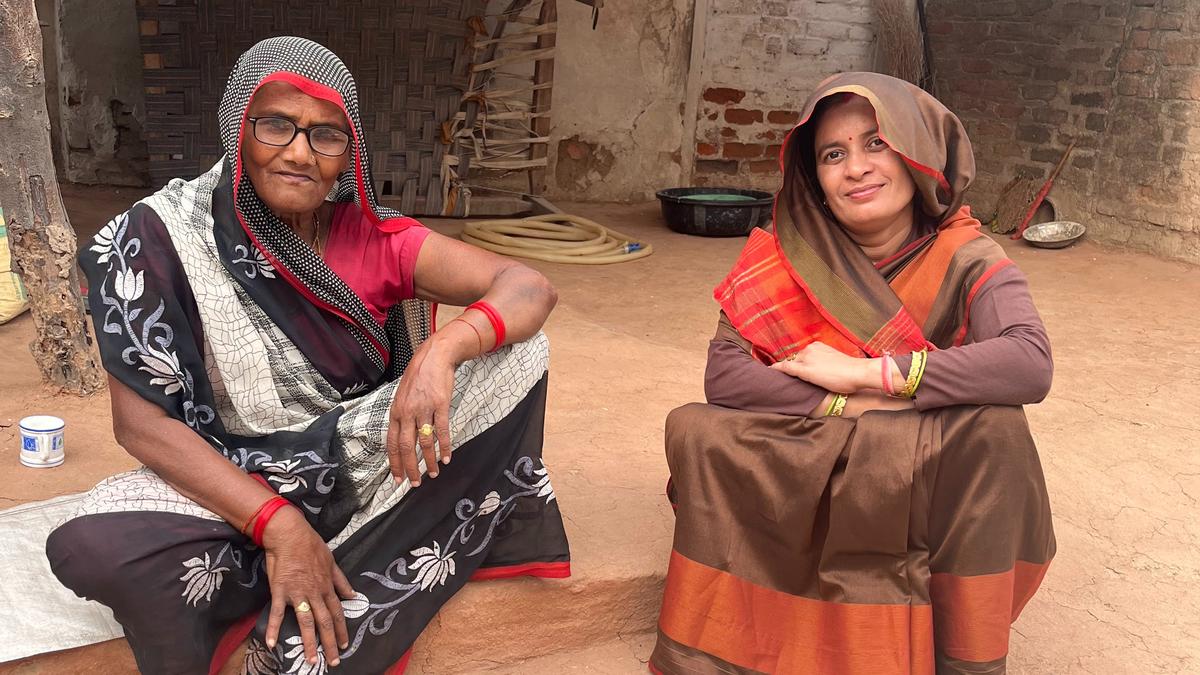
Netradipa Patil, an ASHA worker from Kolhapur, looks at 52-year-old Haseena Atar as a daughter she brought back to life. In 2019, when Atar lost her entire family within a year, she sank into depression. Patil and two other colleagues, trained in mental health awareness, stepped in. They conversed with Atar, visited her regularly and cleaned her home, brought food, and ensured she took her medicines on time. Today, Atar has regained her health and independence to a great extent, thanks to the three ASHA workers who went beyond their call of duty. Stories like these reveal the emotional labour that India’s 10.4 lakh Accredited Social Health Activists (ASHAs) perform daily. Despite being a voluntary workforce, ASHAs are often the first point of contact in rural healthcare. They juggle maternal and child health, immunisation, TB monitoring, non-communicable disease surveys, record-keeping (online and offline), and countless other tasks. And their meagre monthly pay, varying by State — from ₹6,400 in Madhya Pradesh to ₹13,000 in Maharashtra — is often delayed. Recently, in some regions, ASHAs have taken on the duty of ‘mental health gatekeepers’ under both government and NGO programmes. The National Health Mission (NHM) has started integrating mental health modules into ASHA training nationwide. ASHAs are being asked to counsel adolescents, identify depression, anxiety and suicide risk, creating crucial awareness even as they themselves remain overburdened and underpaid. Distress calls Over 56 million Indians live with depression and 38 million with anxiety disorders. The National Crime Records Bureau recorded 1,71,418 suicides in 2023. Despite the 2017 Mental Healthcare Act decriminalising suicide, rural mental health support continues to be limited and is often stigma-ridden. This is where ASHAs, with their deep-rooted community knowledge, come in. ‘Specialised training is provided in areas where mental health issues are more prevalent. ASHAs are capable of handling this training as they understand their community well, which gives them an advantage,’ says Mohd. Sadiq Khan, a trainer with the National Health Systems Resource Centre in Jammu and Kashmir. At NIMHANS, Bengaluru, Dr. Anish V. Cherian leads Project Suraksha, a community-based suicide prevention initiative in nearby Channapatna Taluk. NIMHANS has trained over 1,000 ASHAs and Anganwadi workers to raise suicide awareness, identify people at risk, ‘reduce access to means like pesticides and alcohol’, and link them with mental healthcare options. ‘We’ve already identified over 800 cases of attempted suicide, many through ASHAs. Suicide is rarely impulsive, so identifying attempters and providing timely interventions is key,’ says Dr. Cherian. Anusuya Lokesh now recognises symptoms like hallucination, anxiety, excessive anger and restlessness as possible signs of mental illness. These would be attributed to superstitious beliefs earlier. ‘Now we know it’s brain chemistry. And there’s no shame, treatment is possible,’ says the ASHA worker from Rampura, Channapatna. In Madhya Pradesh, 14,570 ASHAs have been trained in mental health, neurological disorders, and substance abuse since 2020, says Dr. Prabhakar Tiwari, Senior Joint Director, National Health Mission. Though there is no data yet, mental health clinics in the State are showing evidence of this awareness initiative ‘percolating to rural areas,’ he says. For most ASHAs, mental health is new terrain. ‘I didn’t know we could talk and make someone feel better,’ says Sita Chaurey, an ASHA from Narmadapuram, who was trained by Sangath, a mental health non-profit working with the Madhya Pradesh government. Since 2019, about 5,000 ASHAs have been trained across several districts, says Dr. Anant Bhan, principal investigator at Sangath. The organisation pays the ASHAs a small sum for their work. Chaurey and her peers screen pregnant and postpartum women using the PHQ-9, a question-based depression checklist. ‘Building trust is
Leave a Reply