Log In Sign Up I want to bring to life a full-scale SaaS platform that gives every business instant access to five virtual colleagues: an intelligent email assistant, a proactive sales expert, a strategic marketing guru, a knowledgeable legal advisor, and an always-available receptionist. Each role must converse naturally thanks to robust natural-language processing, handle its own automated scheduling, and plug seamlessly into the user’s existing email and calendar services so setup feels effortless. One such product is Marblism: [login to view URL] . The benchmark is [login to view URL] , yet our goal is to outshine it in depth, accuracy, and polish. Users should enjoy advanced, deep-personalization controls—everything from tone of voice to workflow logic—so the AI workers truly feel like part of their team. Key outcomes I expect: • A production-ready, multi-tenant SaaS architecture that scales. • Secure OAuth-based integrations for major email and calendar providers. • A responsive web app with an intuitive dashboard where users create, train, and monitor each AI employee. • Clear metrics, logging, and controls so businesses always understand and trust what the AI is doing. Acceptance criteria will include latency benchmarks for conversation handling, end-to-end automated meeting booking without human intervention, and a smooth onboarding flow that keeps total setup under five minutes. If you have solid experience in generative AI, SaaS back-end design, and consumer-grade UX, I’m ready to collaborate and move quickly. Project ID: 40230209 26 proposals Open for bidding Remote project Active 1 min ago Bid amount Email address Set your budget and timeframe It’s free to sign up and bid on jobs 26 freelancers are bidding on average $13,930 USD for this job With over a decade of experience in web and mobile development, I understand the importance of delivering a cutting-edge AI Employee Platform like the one you envision. Your project requires a robust SaaS architecture, seamless integrations, and an intuitive user interface for effortless setup and management of virtual colleagues. I am confident in my ability to meet these requirements and exceed your expectations. In the realm of AI, I have successfully implemented generative AI solutions and consumer-grade UX designs in the past, aligning perfectly with the advanced functionalities you seek. My portfolio includes successful projects in fintech, eCommerce, and healthcare, showcasing my ability to tailor solutions to specific industries and deliver tangible results for clients like you. If you are looking for a partner who can bring your vision to life efficiently and with industry-leading expertise, I am ready to collaborate and ensure a smooth and successful project execution. Let’s connect and discuss how we can make your AI Employee Platform a reality. $16,000 USD in 75 days $10,000 USD in 7 days Hello As per your project post, you are looking to build an AI Employee SaaS Platform that provides businesses with multiple intelligent virtual colleagues such as email assistant, sales expert, marketing advisor, legal assistant, and receptionist, all capable of natural conversations, automated scheduling, and seamless integration with email and calendar systems. My approach will focus on designing a scalable multi tenant SaaS architecture with dedicated AI agent orchestration, secure OAuth integration with major email and calendar providers, and a responsive web dashboard where users can create, train, customize, and monitor their AI employees. I will implement advanced personalization controls such as tone, behavior logic, and workflow automation, along with detailed activity logs, performance tracking, and secure data handling to ensure trust, compliance, and operational visibility. I specialize in AI powered SaaS platforms, intelligent workflow automation systems, secure third party integrations, and scalable cloud based application development. My focus is on delivering
Category: Uncategorized
-

Why Did I Trust Jeff Bezos?
In June 2017, in one of those strange turns of life, I found myself at a dinner in a palazzo in Turin, Italy, sitting next to Jeff Bezos. We had both been invited to speak at a conference convened by an Italian billionaire to discuss the future of newspapers, I as the editor of HuffPost and Bezos as the owner of The Washington Post, which he had bought four years earlier. I was surprised and, I’ll confess, a little delighted to find myself alongside the man of the hour. Bezos had cut quite a figure at the conference — offering a passionate case for plowing more resources into the heart and soul of the newspaper he pledged to rebuild. ‘What they needed was a little bit of runway and the encouragement to experiment, and to stop shrinking,’ he said of The Post’s newsroom. ‘You can’t shrink your way into relevance.’ Under his ownership, the paper had added about 140 reporters and rounded the corner to profitability on the back of its journalists’ verve in breaking big stories. This was music to my ears. It had been an especially bruising month for the industry, and hundreds of journalists had lost their jobs. I had been asked to slash the staff of HuffPost, which I had joined six months earlier, as part of a cost-cutting exercise tied to our parent company’s acquisition of Yahoo. For reasons I could scarcely understand, the deal required laying off 39 journalists, along with more than 2,000 other employees. Yet here was one of the richest and most celebrated business titans in the world urging the opposite course. As we dug into our sumptuous meal in an ancient hall filled with media grandees, I made a nervous, self-deprecating crack about being a cynical wretch out of place amid the splendor. Bezos quickly corrected me. Great journalists, he said, were not cynical. They were skeptical, as they should be. I offered up a sheepish grin, charmed to hear him echo the credo of my earliest, most grizzled newsroom mentors. Maybe, I thought, this guy was worth trusting. Turns out the joke was on me, and on journalism. Last week The Washington Post laid off nearly half its staff — according to a recent accounting from the newsroom’s guild — removing brave foreign correspondents, axing its celebrated sports section, gutting its metro reporting staff and more. The cuts, the paper’s leaders said, were aimed at stemming losses and enticing Bezos to keep investing. The paper was, in other words, attempting to shrink its way into relevance — not with its audience but with its unfathomably wealthy, highly distracted owner, whose fortune has more than doubled in the nine years since I met him. Its newly unemployed journalists, by contrast, face a bleak job market, as their colleagues and friends pass a digital tin cup to raise money to support them. This wanton destruction took me back to that encounter with Bezos. Why, I wondered, had I trusted him? Trust is an elusive quality nowadays, seemingly vanishing from public life. That disappearance is particularly acute in news media, as new research this week from Pew underscored. An analysis of polling found that 57 percent of Americans ‘express low confidence in journalists to act in the best interests of the public.’ On its face, this looks like an existential problem for journalism. What good is reporting the news if people don’t trust it? Restoring trust, everyone tends to agree, is a worthy goal. But in an age of digital platforms, algorithmic filtering and declining media literacy, there is no simple recipe
-

Europe Workforce Management Market Size & Share 2034
Europe Workforce Management Market Report Summary The Europe workforce management market was valued at USD 2.72 billion in 2025, is estimated to reach USD 2.95 billion in 2026, and is projected to reach USD 5.72 billion by 2034, growing at a CAGR of 8.62% during the forecast period from 2026 to 2034. The growth of the Europe workforce management market is driven by increasing regulatory complexity, rising labor shortages, and the rapid adoption of digital HR technologies across industries. Workforce management platforms enable organizations to optimize scheduling, time tracking, compliance, and labor cost forecasting while aligning with frameworks such as the EU Working Time Directive and GDPR. Additionally, the expansion of hybrid work models, AI-driven staffing analytics, and cloud-based workforce solutions is transforming workforce operations across European enterprises. Key Market Trends Growing adoption of AI-driven predictive scheduling and skills-based workforce planning solutions. Rising implementation of cloud-based workforce platforms to ensure regulatory compliance and scalability. Expansion of hybrid and remote workforce coordination tools supporting flexible work models. Increasing demand for real-time labor analytics to manage staffing shortages and optimize productivity. Strong focus on GDPR-compliant workforce platforms with embedded privacy and consent management features. Segmental Insights Based on deployment mode , the cloud segment held the dominant share of the Europe workforce management market in 2025 , driven by operational flexibility, automated compliance updates, and reduced infrastructure costs. Based on organization size , the large enterprises segment accounted for a significant share of the Europe workforce management market in 2024 , supported by complex compliance requirements and cross-border workforce operations. The small and medium enterprises segment is expected to register the fastest growth due to increasing regulatory pressures and the availability of modular SaaS-based workforce solutions. Regional Insights The Europe workforce management market shows strong regional adoption supported by regulatory enforcement, digital transformation initiatives, and evolving labor practices. Germany led the Europe workforce management market with a 23.3% share in 2024 , driven by strict labor regulations, advanced digital infrastructure, and large-scale enterprise adoption of AI-based scheduling platforms. The United Kingdom holds a significant position due to the early adoption of flexible work models and strong demand from the healthcare and retail sectors. France is expected to witness robust growth supported by state-led digitalization initiatives and complex labor codes requiring automated compliance solutions. The Netherlands and Sweden are expanding steadily due to progressive labor policies, high digital maturity, and increasing adoption of employee-centric scheduling platforms. Competitive Landscape The Europe workforce management market is highly competitive, featuring global enterprise software providers, regional HR technology vendors, and emerging startups focused on workforce optimization solutions. Leading companies are investing in cloud-first architectures, AI-powered analytics, and localized compliance capabilities to address diverse regulatory environments across Europe. Prominent players operating in the Europe workforce management market include Oracle Corporation, SAP SE, Automatic Data Processing, Inc. (ADP), Ultimate Kronos Group (UKG Inc.), Workday Inc., Ceridian HCM Holding Inc., IBM Corporation, NICE Ltd., Infor Global Solutions, Inc., ATOSS Software AG, SD Worx NV, Quinyx AB, Blue Yonder Group, Inc., Calabrio, Inc., and Zebra Technologies Corporation. Europe Workforce Management Market Size The Europe workforce management market size was valued at USD 2.72 billion in 2025 and is anticipated to reach USD 2.95 billion in 2026 from USD 5.72 billion by 2034, growing at a CAGR of 8.62% during the forecast period from 2026 to 2034. The workforce management is an integrated software and service solutions designed to optimize employee scheduling, time tracking, absence management, compliance, and labor cost forecasting across diverse industries. These systems align operational staffing needs with regulatory frameworks such as the EU Working Time Directive, which mandates
-

Pakistan pledges ‘no negligence’ over Imran Khan’s eyesight complaint
Rawalpindi, Feb 13 (UNI) Pakistan’s Parliamentary Affairs Minister Dr Tariq Fazal Chaudhry on Friday pledged “zero negligence” on the caring of PTI founder and former PM Imran Khan’s alleged near-blindness, stating that the former premier would be taken wherever he chooses for the best medical treatment, to cure his ailing sight, alleged to be operational at little more than 15 per cent.
Speaking to reporters outside Parliament, Chaudhry added that the incarcerated ex-premier would be taken “Wherever he wants to go for a check-up, he will be taken. If he wants to go to Al-Shifa Eye Trust, he will be taken there. If the Chief Justice recommends a doctor, he will be taken there.”
The remarks came a day after a two-member bench of the Supreme Court of Pakistan, headed by Chief Justice Yahya Afridi, was informed by PTI counsel Advocate Salman Safdar that Khan had been left with only “15 per cent vision” in his right eye, prompting massive criticism from the political opposition, which has accused the authorities in Adiala Jail of neglecting medical care.
Chaudhry urging restraint, acknowledged the matter is highly “sensitive” nature and slammed what he described as attempts to politicise the issue.
“Misrepresenting facts is completely unfair,” he said, while promising that eye specialists and “super-specialists” would examine the former premier and that “every possible treatment available” would be ensured.
Reacting to protests and criticism, the minister said that the government had not received any complaint from anywhere including Khan’s family in this regard so far, he said recalling visit by family members to the jail in December or during the medical board examination on Dec. 9, or when the Toshakhana verdict was announced on December 20.
According to the minister, a doctor had recommended on January 16 that Khan be shifted to the Pakistan Institute of Medical Sciences (PIMS) for an eye check-up. However, he claimed the transfer did not take place “at the request of PTI, not the jail authorities or the government”.
Following a medical procedure on January 24, doctors issued a report, he added, contrasting it with what he described as a subsequent “report by the lawyer”.
Amid alleged worsening of the situation, the Supreme Court on Thursday ordered the formation of a medical team to examine Khan’s eye condition and directed that he be allowed to speak with his children. Both the medical examination and the phone calls are scheduled to be completed before February 16. UNI ANV KK -

“A very Chinese time,” and why it resonates globally
BEIJING, Feb. 13 (Xinhua) — In a few days, the Spring Festival will bathe cities and villages in the warm glow of red lanterns. Across China, hundreds of millions will gather at home to mark the traditional new year with rituals that stretch back centuries. Across airports and border points, the sound of rolling suitcases has become constant as travelers stream in to follow one of this year’s most talked-about travel trends: Spring Festival in China. People are eager to throw themselves into the rich tapestry of this UNESCO-listed form of heritage — pasting red couplets on doorways, folding dumplings by hand, wandering lantern-lit temple fairs, and watching dragon and lion dances wind their way through bustling streets. The fascination seems to be building from the ground up. On Instagram and TikTok, Gen Z users in countries such as the United States and Australia are experimenting with what they see as Chinese wellness routines: drinking hot water, trying out Baduanjin qigong, or padding around the house in slippers. Many playfully describe themselves as “becoming Chinese,” saying they are feeling “Chinese,” or that they’ve arrived at “a very Chinese time” in their lives. These accounts represent the latest turn in a broader positive shift in how China is perceived globally. Earlier indications included a flood of raw travel vlogs on YouTube after visa rules sharply eased in 2023, a sudden rush to the Chinese Xiaohongshu social media platform when a U.S. TikTok ban looked imminent in early 2025, and a growing international appetite for Chinese games, animation and design. Taken together, these occurrences paint a picture of a rare Chinese moment, when the world is looking past the stock imagery of pandas, kung fu and the Great Wall to encounter a China that is diverse, relatable and increasingly confident in its own skin. What makes this fascination particularly striking is its texture and spontaneity. International attention has crept from consumer brands — electric cars, DJI drones and Huawei devices — to travel, social media, and now the details of daily life: how people eat, relax and stay healthy. And none of this has been orchestrated. Compared to the staged spectacle of the 2008 Beijing Olympics, today’s engagement flows from lived experiences, chance encounters and the natural draw of cultural events like the Spring Festival. This is soft power at its most authentic, and all the more potent because it doesn’t preach. Influence becomes real when curiosity evolves into voluntary emulation. Post-pandemic visa relaxations have acted as a clear catalyst, sparking a wave of inbound tourism. Real-time, unfiltered exchanges on Xiaohongshu have chipped away at old stereotypes of backwardness, smog or faceless uniformity. A flourishing domestic cultural economy has also contributed, producing an outpouring of creativity that resonates internationally. Examples include hit video game “Black Myth: Wukong” and “Ne Zha 2,” the animated blockbuster featuring a defiant boy-god from Chinese mythology. However, to explain away this energy as little more than aesthetics, online trends or algorithmic amplification would miss the deeper dynamics. At its core is a recognition of China’s transformation over the past decades: a sustained path of rapid development, effective governance and social stability that appears increasingly distinctive in an era of global uncertainty. This trajectory is visible in the images and stories circulating online: sleek infrastructure, cyberpunk skylines, cashless payments and electric vehicles that can at times feel surreal. Creators repeatedly describe their experiences as “hyper-modern,” “futuristic” or “like living in 2050.” Beyond the cities, white wind turbines stretch across plains, solar farms glint under the desert sun, lush mountains and clear rivers frame stunning natural diversity, and ancient
-
MiniMax Unveils M2.5: $1/HR ‘Full‑Stack AI Employee’ Rivals Claude Opus 4.6
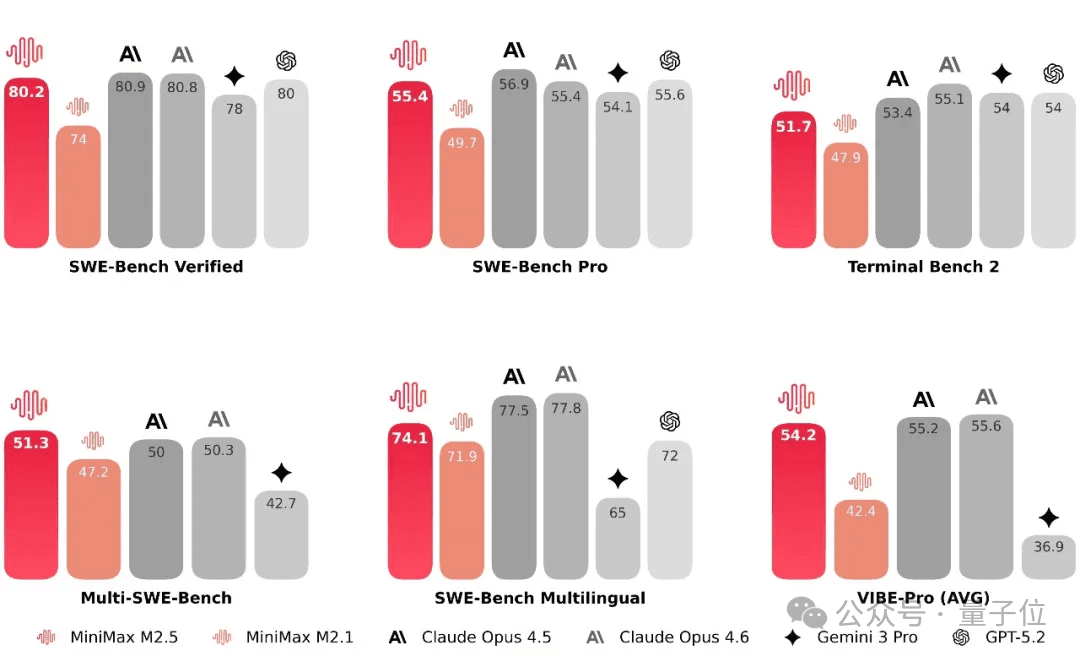
February 13, 2026 — MiniMax officially launched its new‑generation text model, MiniMax M2.5, positioning it as a ‘production‑grade native agent model’. With only 10 billion activated parameters, M2.5 delivers flagship‑level performance. On SWE-Bench Verified, it scored 80.2%; on Multi-SWE-Bench, it ranked first — surpassing Claude Opus 4.6 in multi‑language, complex environments. The model exhibits ‘native spec behavior,’ proactively deconstructing architecture and functional planning before coding, closely resembling a human architect. M2.5 is built for full‑stack development (frontend, backend, database) and Vibe Coding — turning natural language into executable system designs. It achieves 100+ tokens per second inference throughput (2x mainstream flagship models). At 100 tokens/sec, continuous operation costs $1/hour; at 50 tokens/sec, $0.3/hour. MiniMax attributes M2.5’s rapid iteration — from M2 to M2.5 in 108 days, SWE-Bench score jumping from 69.4 to 80.2 — to large‑scale Agent Reinforcement Learning (RL Scaling). Its proprietary Forge framework decouples training engine from agent, enabling generalized optimization across any scaffolding, with 40x training acceleration via asynchronous scheduling and tree‑based merging. Internally, M2.5 now autonomously handles 30% of real business tasks at MiniMax, covering R&D, product, sales, HR, and finance. In coding, M2.5‑generated code accounts for 80% of newly committed code. M2.5 went live on MiniMax Agent on February 12 and was globally open‑sourced the next day. Within 24 hours, users built over 10,000 experts on the platform. Source: QbitAI
-
Global Business Summit 2026 Live Updates: India’s FTA Doctrine — Trust, Transparency, Time-Bound Certainty: Piyush Goyal
Global Business Summit 2026 Live Updates: This year’s edition of the ET NOW Global Business Summit (GBS) 2026 reflects the scale, speed and significance of the transformations reshaping global economies. From rapid technological acceleration and geopolitical realignments to sustainability imperatives and evolving governance frameworks, the summit will examine the forces defining the next decade.
GBS 2026 will deliberate on key themes including economic disruption, Industry 5.0, the future of globalisation, workforce transformation, energy security and business diversification — bringing together diverse perspectives to map the road ahead.
Who Shapes the Dialogue?
The ET NOW Global Business Summit 2026 convenes an influential mix of decision-makers and thought leaders, including:
Heads of State and Government
CEOs, board members and institutional investors
Ministers, regulators and policy architects
Industry-defining entrepreneurs and futurists
Day 1 Dignitaries
Prime Minister Narendra Modi will grace Day 1 of the summit, setting the tone for discussions.
Other key Indian leaders attending include:
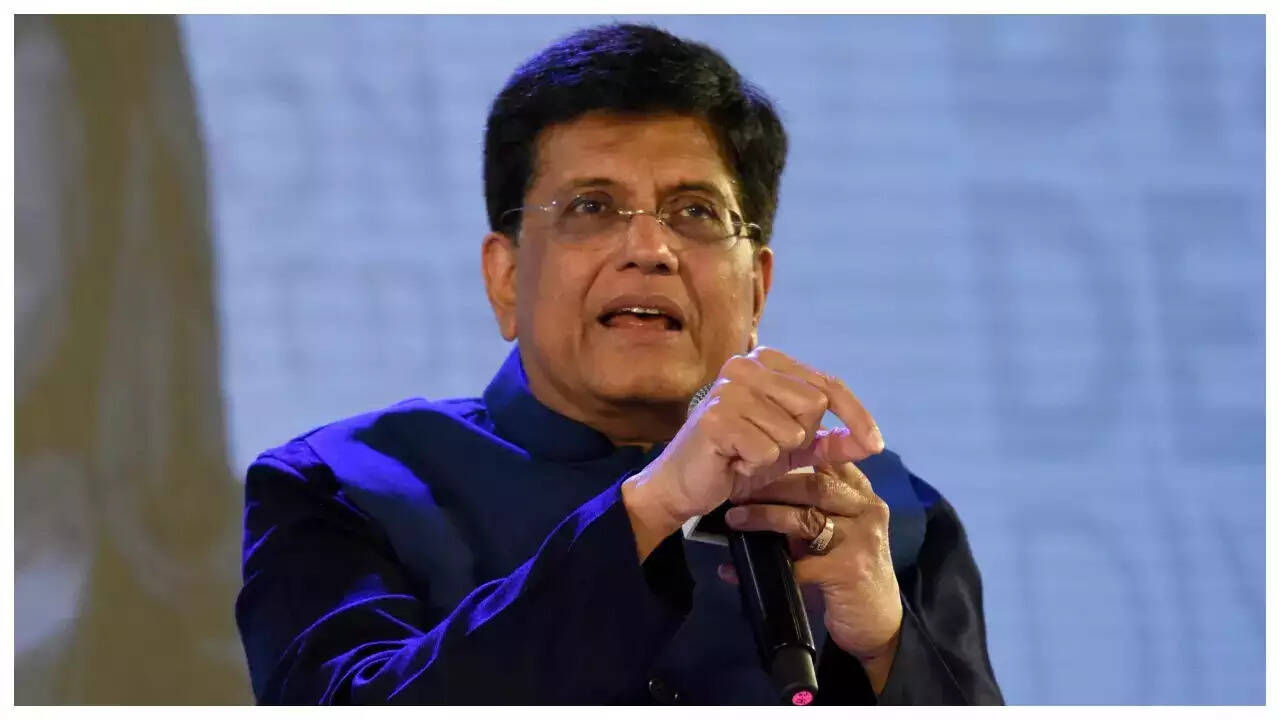
Piyush Goyal, Minister of Commerce and Industry
Chirag Paswan, Union Minister of Food Processing Industries
Devendra Fadnavis, Chief Minister of Maharashtra
The global and industry representation on Day 1 includes:
Ann E. Harrison, Economist and Former Dean, Haas School of Business, University of California, Berkeley
Madhusudan Kela, Founder, MK Ventures
Sir Martin Sorrell, Chairman, S4 Capital PLC and Founder, WPP plc
Namit Malhotra, Founder and Global CEO, Prime Focus Limited and DNEG
Ranil Manohara Salgado, Senior Resident Representative, IMF
Sebastian Eckardt, Regional Practice Director (Prosperity), South Asia Region, World Bank
Vikrant Shrotriya, Corporate Vice President and Managing Director, Novo Nordisk India
Prashant Tandon, Co-founder & CEO, Tata 1mg
Arpita Vinay, Senior Managing Director & CEO, Spark Capital PWM
Praveena Rai, MD & CEO, MCX
Nishant Arya, Vice Chairman & MD, JBM Group
Tuhin Kanta Pandey, Chairman, Securities and Exchange Board of India
Kunal Bahl, Co-founder, Snapdeal; Titan Capital; AceVector Group
Greg Zeluck, Partner & Co-Head, Asia Buyout, Carlyle
Dr. Vivek Lall, Chief Executive, General Atomics Global Corporation
Kishore Moorjani, CEO, Alternatives, Private Funds, CapitaLand Investment
Mary Ellen Iskenderian, President and CEO, Women’s World Banking
Mike Jatania, CEO & Chairman, The Body Shop; Co-founder, Aurea
Rakesh Bharti Mittal, Vice Chairman, Bharti Enterprises
Shobana Kamineni, Executive Chairperson, Apollo Health Co & Promoter Director, Apollo Hospitals
H.M. Queen Rania Al Abdullah, Hashemite Kingdom of Jordan
Anant Maheshwari, President & CEO (Global Regions), Honeywell
David Schwimmer, CEO, London Stock Exchange Group
Dr. Piotr Antoni Świtalski, Ambassador of Poland to India
H.E. Diana Mickevičienė, Ambassador of Lithuania to India
Dr. Ewa Suwara, Deputy Head, EU Delegation to India
H.E. Charles Michel, Former Prime Minister of Belgium and President Emeritus of the European Council -
Careervira Launches Vira AI, India’s First Universal AI Orchestrator Powering LMS, LXP, HRMS, and ATS Tools into a Unified AI Ecosystem
Skill Intelligence Agents don’t just show you a skills gap; they continuously map roles to skills in real-time, automating 90% of the analysis. Career Orchestration Agents don’t just host a career page; they design personalized paths and succession plans, delivering 88% automation. Learning Orchestration Agents manage the heavy lifting of scheduling, content curation, and adaptive journeys. Compliance Sync Agents handle the regulatory tracking and audit reporting that keeps you up at night. Join the community of 2M+ industry professionals. Subscribe to Newsletter to get latest insights & analysis in your inbox. All about ETHRWorld industry right on your smartphone! Download the ETHRWorld App and get the Realtime updates and Save your favourite articles. For the past two decades—first at Google and YouTube in Singapore, building platforms for India and Southeast Asia, and now at Careervira AI —Vijay P. Singh, Founder of Careervira AI , has been obsessed with one question: Why is enterprise technology so much harder to use than the consumer apps we use every day?In the world of HR and Learning & Development (L&D), this gap is painful. We have tools for everything—LMS for compliance, LXP for experience, HRMS for records. Yet, for most CHROs and L&D leaders I speak with, the reality isn’t “intelligence.” It’s administration. Your teams are drowning in 20+ hours a week of manual work: stitching data together, chasing course completions, and building reports that are obsolete the moment they’re exported.We built Careervira AI to solve this for the mid-market, earning recognition as a globally top-10 ranked LMS and LXP platform. But we realized that providing a better system wasn’t enough. You don’t just need better tools; you need a better way of working. ‘That is why today, I am incredibly proud to introduce Vira AI , our new universal AI orchestrator,’ says Vijay Singh.Careervira AI is entering Phase II of the HR tech evolution. Phase I was about digitizing records. Phase II is about orchestration and execution.Vira AI isn’t just another chatbot offering advice. It is an orchestration layer that sits on top of your existing stack—connecting your LMS, LXP, HRMS, and ATS into a single, unified ecosystem. It shifts AI from advisory (telling you what to do) to execution (doing the work for you).Vijay Singh reiterates, ‘We designed Vira AI with a multi-agent architecture to automate 94%–98% of the routine workflows that bog your teams down.’This isn’t about replacing people. It’s about giving your L&D managers their time back—so they can stop being administrators and start being the strategic architects of your workforce culture.Vijay Singh reinforces, ‘We built this on top of our globally top-ranked LMS and LXP foundation because intelligence needs infrastructure. You still get the robust tracking, security, and analytics you expect, plus access to our marketplace of 40,000+ courses and 1,000+ experts across top english speaking countries. But now, Vira AI turns that content into an active engine for growth.”Most importantly, we remain committed to radical affordability. True innovation shouldn’t be a luxury for the Fortune 500. We deliver these capabilities at $2–$10 per user per month—a 70% cost reduction versus legacy systems—because we believe every mid-market organization deserves enterprise-grade power.’Vijay Singh calls out to his peers: ‘To my fellow CTOs, CHROs, and L&D Heads: The era of ‘rip-and-replace’ is over. You don’t need to throw out your current stack to get AI capabilities. You need an intelligence layer that unifies them.’ At Careervira, with our team spread across India, Southeast Asia, the UK, the US, and Canada, we are building the Universal AI Employee Platform to make this future accessible today. I invite you to stop managing administration
-
New in Microsoft Marketplace: February 12, 2026
Get it now in our marketplace AI-Powered Supply Chain Solutions: Enmovil’s Supply Chain solution uses AI for precise forecasting, inventory optimization, and synchronized planning across demand, stock, and logistics. It enhances delivery reliability, cuts costs, speeds planning, and improves adaptability, enabling enterprises to operate efficiently and resiliently amid disruptions. AutoSec Security Scanning: AutoSec offers AI-powered website security scanning that detects critical vulnerabilities in minutes, replacing costly, slow manual penetration testing. It provides actionable reports, reduces false positives, and integrates via API. Ideal for IT, DevOps, and SMBs, it ensures continuous, affordable protection against complex cyber threats. AvaTax: Agentic Tax and Compliance: AvaTax automates accurate tax calculations globally, supporting sales, use, VAT, and more across over 190 countries. It integrates with major ERPs and ecommerce platforms, updates rates automatically, and ensures compliance with real-time processing. Trusted by governments, AvaTax offers fast, scalable, and reliable tax management for businesses of all sizes. Avaya Infinity: Avaya Infinity is a unified customer and employee experience platform integrating voice, video, chat, and email with CRM and back-office systems. It offers AI-driven omnichannel workflows, low-code/no-code orchestration, real-time data insights, and flexible deployment options, enabling personalized, seamless interactions and scalable, secure operations. Blackbaud Development Agent: Blackbaud’s Development Agent is an AI-powered virtual team member that helps social impact organizations grow donor bases. It manages donor portfolios by identifying, cultivating, and stewarding supporters, automates fundraising tasks like outreach and personalized emails, and ensures data privacy within the Blackbaud ecosystem. Cartagena Link: Cartagena Link integrates customer dialogue with sales, finance, and resource allocation, providing a comprehensive, two-way data flow between Microsoft Dynamics 365 and other systems. It streamlines CRM and ERP systems, ensuring data quality, efficient management, and better business insights. Pre-built solutions and ongoing support enhance flexibility, efficiency, and customer service for business growth. Celiveo 365 Business Edition (Legacy): Celiveo 365 Business Edition is a cloud-based print management solution integrated with Microsoft Azure, reducing print waste. It offers secure, AI-driven printing with card/PIN authentication, seamless Microsoft 365 integration, scalability, and ISO-certified security. Ideal for modern workplaces, it deploys quickly without local drivers or servers. This offer is intended for existing Celiveo clients. Crayon Snowflake Offer: Crayon DMCC offers licensing for Snowflake Data Cloud, a fully managed platform that unites siloed data across multiple clouds and geographies. It enables secure collaboration, diverse analytics, and near-unlimited resources. Cybersecurity Management: ViCyber offers small to mid-sized businesses an automated, always-on cybersecurity service. It simplifies managing cyber risks, compliance, and insurance requirements without needing large in-house teams, making enterprise-level protection accessible and cost-effective for organizations with limited security resources. Cybersecurity Management Setup: ViCyber simplifies cybersecurity for small to mid-sized businesses lacking large security teams. It automates risk management, compliance, and cyber insurance, turning complex enterprise-level obligations into an easy, always-on service, reducing cost and effort for business owners, IT leaders, and advisors. Datamotive Easy Migrate: Easy Migrate enables fast, agentless workload migration to Microsoft Azure. It offers hypervisor-level replication, online incremental data sync, resume capability, and native format storage for cross-cloud moves. The tool ensures data consistency and logical virtual machine grouping. Datamotive EasyDR: EasyDR offers agentless, bi-directional disaster recovery (DR) for Microsoft Azure. With EasyDR, you get incremental failover/failback, efficient data storage, WAN-optimized transfer, IP retention, and single-click recovery. Simplify disaster recovery drills, support point-in-time recovery, and reduce costs by powering off DR VMs and replicating only delta changes. Datamotive Easy Hybrid DR: Easy Hybrid DR enables fast, agentless disaster recovery (DR) to Microsoft Azure for any workload size. It supports seamless failover/failback, efficient data storage, WAN-optimized replication, original IP retention, and centralized orchestration. It simplifies DR drills and supports recovery from
-

BASF Strengthens Business Services Through Global Hub Setup
Key Takeaways
Under the strategy, key Finance and Human Resources functions will be consolidated at the new India hub, while supply chain activities will be optimized through BASF’s existing center in Kuala Lumpur, Malaysia. Meanwhile, services that depend on proximity to customers or local operations will remain regionally managed to ensure agility and timely support.
Management noted that the hub model will help simplify processes, increase automation and leverage competitive operating costs, enabling a more flexible and scalable service platform that supports BASF’s long-term strategic priorities.
This expansion complements BASF’s existing Global Business Services footprint in Berlin, Kuala Lumpur and Montevideo. Global Business Services employs roughly 8,500 people and provides services across areas, including Finance, Logistics, HR, Communications, Regulatory & IP, and Environment, Health, Safety & Quality.
Shares of BASFY are up 19.6% over the past year against the industry’s fall of 10.9%
Image Source: Zacks Investment ResearchBASFY’s Zacks Rank & Key Picks
Better-ranked stocks in the Basic Materials space include Albemarle Corporation (ALB Quick QuoteALB – Free Report) , Air Products and Chemicals, Inc. (APD Quick QuoteAPD – Free Report) and Methanex Corporation (MEOH Quick QuoteMEOH – Free Report) . ALB sports a Zacks Rank of #1 (Strong Buy), while APD and MEOH carry a Zacks Rank #2 (Buy). You can see the complete list of today’s Zacks #1 Rank stocks here.
The Zacks Consensus Estimate for ALB’s current-year loss is pegged at 70 cents per share, indicating a 70.1% year-over-year increase. Its earnings beat the Zacks Consensus Estimate in three of the trailing four quarters and missed once, with the average earnings surprise of 35.3%.
The Zacks Consensus Estimate for APD’s current fiscal-year earnings stands at $13.01 per share, reflecting a 8.15% year-over-year increase. Its earnings beat the Zacks Consensus Estimates in two of the trailing four quarters and missed twice, with the average earnings surprise of 0.44%.
The Zacks Consensus Estimate for MEOH’s current fiscal-year earnings is pegged at $3.17 per share, indicating a 15% year-over-year decline. Its earnings beat the Zacks Consensus Estimates in three of the trailing four quarters and missed once, with the average earnings surprise of 17.4%.
5 Stocks Set to Double Each was handpicked by a Zacks expert as the favorite stock to gain +100% or more in the months ahead. They include Stock #1: A Disruptive Force with Notable Growth and Resilience Stock #2: Bullish Signs Signaling to Buy the Dip Stock #3: One of the Most Compelling Investments in the Market Stock #4: Leader In a Red-Hot Industry Poised for Growth Stock #5: Modern Omni-Channel Platform Coiled to Spring Most of the stocks in this report are flying under Wall Street radar, which provides a great opportunity to get in on the ground floor. While not all picks can be winners, previous recommendations have soared +171%, +209% and +232%.
See Our Newest 5 Stocks Set to Double Picks >>