I Replaced My Entire Workflow with AI Agents for 7 Days. Here’s the Unfiltered Truth. Saboor Tahir 3 min read · Just now Just now — Listen Share I was drowning. As the founder of Think AI 360, my days had become a monotonous blur of keyword research, client emails, and the constant, gnawing pressure to stay ahead of the AI curve. I was spending four hours every single day on ‘grunt work’ — the kind of soul-draining tasks that leave you too exhausted to actually be creative by the time you’re done. So, I decided to do something radical. I handed the keys to my professional life to a team of AI Agents for exactly one week. I didn’t just use ChatGPT to ‘write a poem.’ I used autonomous agents like Manus AI to plan my strategy, execute deep-dive research, and manage my entire content workflow. Here is the unfiltered, raw truth of what happened when I stopped working and started directing. The Setup: My Digital ‘Board of Directors’ I didn’t just want a chatbot; I wanted a team. I structured my week around three specific AI personas that I treated like employees, not tools: 1.The Strategist (Manus AI): Tasked with high-level planning and multi-step execution. 2.The Fact-Checker (Perplexity/Grok): My eyes and ears for real-time data and source verification. 3.The Editor (Claude 4): My partner for refining tone and scrubbing away that ‘robotic’ AI smell from first drafts. My goal was simple: Automate 80% of my output without losing 1% of my human perspective. The Turning Point: The ‘Human vs. Agent’ Efficiency Gap On Wednesday, I ran a ‘Stress Test.’ I took a topic I’d been planning — how to use AI for SEO writing — and I raced my own agents. The Task Human Me (The Old Way) The Agent Team (The New Way) The Verdict Topic Research 90 Minutes 3 Minutes AI Wins (Found 12 more sources) Drafting 1,500 words 180 Minutes 15 Minutes Draw (AI needed my ‘human touch’) Internal Link Strategy 45 Minutes 2 Minutes AI Wins (Zero broken links) Total Time ~5 Hours ~20 Minutes 93% Time Saved The results were staggering. But time isn’t everything. In the creator economy, trust is the only currency that matters. The ‘Dark Side’: Where the Agents Failed Me It wasn’t all magic and efficiency. By Thursday, I hit the ‘Uncanny Valley.’ I asked the agents to write a personal reflection on my First $1,000 Freelancing Month. The result? It was grammatically perfect. It was also dead inside. It lacked the grit, the late-night anxiety, and the specific smell of the cheap coffee I drank when I landed my first big US client. It couldn’t replicate the feeling of that first $1,000 hitting my account. The Lesson: AI can simulate logic, but it cannot simulate scars. I realized that my value as a creator isn’t in the information I provide — it’s in the scars I share. The Verdict: Will I Ever Go Back? Absolutely not. This experiment taught me that we are entering the era of the ‘Centaur Creator’ — half human, half machine. By offloading the mechanical, repetitive tasks to my agents, I spent my Friday doing something I hadn’t done in months: Actually thinking. I wasn’t just ‘producing content.’ I was building a brand. I even had the mental bandwidth to conduct a massive AI Stress Test & Hallucination Gauntlet that I never would have had the energy to finish manually. My Advice to You If you are still using AI as a ‘search engine,’ you are already falling behind. You need to start using
Category: Uncategorized
-

RBC creates new AI Group to help bring top AI opportunities to market
Taps veteran tech executive to lead team TORONTO, Feb. 18, 2026 /CNW/ – Royal Bank of Canada (TSX: RY) (NYSE: RY) today announced the creation of the AI Group, a newly established team reporting to the Chief Executive Officer that will accelerate the bank’s AI ambitions over the next several years. Building on existing capabilities and top AI talent, this group will work closely with business and functional teams to turn high-potential AI use cases into market-ready solutions that bring value to clients. Already a recognized leader in AI for financial services, ranking #1 in Canada and #3 globally for AI maturity, the bank outlined its bold ambition to achieve up to $1 billion in enterprise value generated from AI benefits by 2027 at its 2025 Investor Day. “RBC has spent the past decade investing in AI, including proprietary data platforms and scale, exceptional talent and world-class security,” said Dave McKay, President and CEO, RBC. “With generative and agentic AI opening new frontiers for financial services, we are creating a dedicated team to leverage our core strength and data scale and partner across the business to turn potential into real value for our clients.” RBC has tapped veteran tech executive Bruce Ross to lead the new group as Group Head, AI. Ross has spent 12 years as Group Head of RBC Technology & Operations, during which time he has built a world-class team and technology platform, led digital transformation, overseen the complex integration of HSBC Bank Canada and driven major product developments. In his new role, Ross will lead a team that serves as an AI accelerator for the bank, with a focus on driving the shift from early-stage AI projects to scaled, client outcomes that amplify the impact of RBC’s people. He will continue to report directly to Dave McKay and will remain on Group Executive. In addition to helping scale the biggest AI opportunities at RBC, the team will also be responsible for advancing research into emerging use cases across generative and agentic AI, while maintaining expertise in security, responsible AI and regulatory expectations. Naim Kazmi, most recently EVP, Commercial, Core Banking & Payments Technology at RBC, moves into the role of Group Head, Technology & Operations and will join the bank’s Group Executive. Kazmi is a transformational global technology leader with more than 25 years of experience delivering innovative solutions, with broad experience across the technology landscape, having held multiple leadership roles across both architecture/engineering as well as technology delivery. He has led several transformative initiatives for RBC, most notably as the technology lead for the successful integration of HSBC Bank Canada. This announcement caps a year that has seen RBC materially advance its AI capabilities including: Earlier this year, RBC partnered with AI company Cohere RBC recently joined MIT’s FinTechAI@CSAIL initiative RBC is the only Canadian bank in the top ten among 50 global banks, in the 2025 Evident AI Index RBC is part of Fintech Open Source Foundation (FINOS) FINOS Governing Board ATOM™, RBC’s proprietary Asynchronous Temporal Model, is securely trained using large-scale financial datasets, enabling RBC to leverage unique insights and develop innovative solutions. In 2025, ATOM was used across 15 RBC products and processes. Almost 27,000 employees are now using RBC Assist and 8,000 Capital Markets employees are using Aiden, RBC’s proprietary AI employee assistant tools to work faster and smarter and free up time for more meaningful work. RBC Lumina™, our internal enterprise data and AI platform designed to drive innovation at scale, is built on one of the largest clusters of graphic processing units (GPUs) among Canadian financial institutions. 1,200+ patent
-

Figma to Report Q4 Earnings: What’s in Store for the Stock?
Figma is set to report Q4 2025 results on Feb. 18, with revenues seen around $293M. FIG added 90,000 paid teams in two quarters, reaching 540,000 customers. Figma’s operating margins shrank as R&D, sales and G&A expenses rose sharply. Figma ( FIG – Free Report) is scheduled to report fourth-quarter 2025 results on Feb. 18. For the fourth quarter, Figma expects revenues to be between $292 million and $294 million. The Zacks Consensus Estimate for revenues is pegged at $293 million. The Zacks Consensus Estimate for Figma’s fourth-quarter 2025 earnings is pegged at 7 cents per share. The figure has remained unchanged for the past 30 days. Factors to Consider for FIG Stock Figma has expanded its product portfolio with the launch of AI-integrated products like Figma Make, Figma Draw, Figma Sites and Figma Buzz, which have enabled Figma to grow its customer base robustly. Approximately 30% of customers spending $100,000 or more in ARR were using Figma Make weekly by the end of the previous quarter. This trend is likely to have persisted in the to-be-reported quarter. Figma, Inc. price-eps-surprise | Figma, Inc. Quote In the third quarter of 2025, FIG’s customer base grew significantly, with the company adding more than 90,000 paid teams in just two past quarters, bringing the total to 540,000 paid customers. Figma is expected to gain from the ongoing customer acquisition in the fourth quarter of 2025. Figma took a leap in AI image generation and editing by integrating Gemini 3 Pro with Nano Banana Pro into its design workflows. Figma also collaborated with OpenAI so editors can prompt ChatGPT to create visual assets and further riff on these in Figma Buzz. Figma also acquired Weavy to enable its users to benefit from the leading AI models and editing tools on a single online canvas. Figma also collaborated with ChatGPT to enhance its AI-based capabilities. These ongoing innovations are likely to have helped Figma retain its customer base from moving away to newer generative AI platforms. Figma commanded a net dollar retention rate of 131% for customers spending $10,000 or more annually in the third quarter of 2025. This positive trend is likely to have persisted in the fourth quarter of 2025. Figma’s third-quarter 2025 operating margins shrank due to a rise in non-GAAP research and development, non-GAAP sales and marketing, and non-GAAP general and administrative expenses, which have increased 43.6%, 18.6% and 68.2%, respectively. This trend is likely to have persisted in the to-be-reported quarter. Earnings Whispers for Figma Stock Our proven model does not conclusively predict an earnings beat for Figma this time. The combination of a positive Earnings ESP and a Zacks Rank #1 (Strong Buy), 2 (Buy) or 3 (Hold) increases the odds of an earnings beat, which is not the case here. Currently, FIG has an Earnings ESP of -7.69% and carries a Zacks Rank #4 (Sell). You can uncover the best stocks to buy or sell before they are reported with our Earnings ESP Filter. Stocks With a Favorable Combination Hive Digital ( HIVE – Free Report) has an Earnings ESP of +38.46% and sports a Zacks Rank #2 at present. HIVE shares have lost 22.4% in the past 12-month period. The company is scheduled to report its third-quarter fiscal 2026 results on Feb. 17, 2026. You can see the complete list of today’s Zacks #1 Rank stocks here. Analog Devices ( ADI – Free Report) has an Earnings ESP of +1.57% and carries a Zacks Rank #2 at present. Analog Devices shares have surged 64.3% in the trailing 12-month period. Analog Devices is set to report its
-

Knight Therapeutics Announces Regulatory Submission of NIKTIMVO® (Axatilimab) in Brazil
MONTREAL, Feb. 18, 2026 (GLOBE NEWSWIRE) — Knight Therapeutics Inc., (TSX: GUD) (“Knight”) a pan-American (ex-USA) specialty pharmaceutical company, announced today that its Brazilian affiliate, United Medical Ltda., has submitted a marketing authorization application to ANVISA, the Brazilian health regulatory agency, for NIKTIMVO® (axatilimab) for the treatment of chronic graft-versus-host disease (GVHD) after failure of at least two prior lines of systemic therapy in adult and pediatric patients 6 years and older. Advertisement On August 4, 2025, Knight announced that it expanded its existing relationship and amended its agreement with Incyte for the exclusive rights to distribute retifanlimab (commercialized as ZYNYZ® (retifanlimab) in the United States and Europe) and axatilimab (commercialized as NIKTIMVO® (axatilimab-csfr) in the United States) in Latin America. Under the terms of the amended agreement, Incyte will be responsible for the development, manufacture and supply to Knight of retifanlimab and axatilimab, and Knight will be responsible for seeking the necessary regulatory approvals and distributing both medicines in Latin America. Knight and Incyte had entered into an exclusive supply and distribution agreement for tafasitamab (commercialized as MONJUVI® (tafasitamab-cxix) in the United States) and pemigatinib (commercialized as PEMAZYRE® in the United States) in Latin America in September 2021. NIKTIMVO® received approval from the U.S. Food and Drug Administration in August 2024 for the treatment of chronic GVHD after failure of at least two prior lines of systemic therapy in adult and pediatric patients weighing at least 40 kg. 1 “For patients living with chronic graft-versus-host disease, every new treatment option can mean hope for a better quality of life’, said Samira Sakhia, President and Chief Executive Officer, Knight Therapeutics Inc. “The submission of axatilimab in Brazil brings us closer to making that hope a reality. At Knight, our mission goes beyond expanding our portfolio-we are committed to ensuring that patients and their families have access to therapies that truly make a difference. This milestone reflects the strength of our partnership with Incyte and our shared dedication to improving lives across Latin America.’ About Chronic Graft-Versus-Host Disease (GVHD) Get the latest news delivered to your inbox Sign up for The Manila Times newsletters By signing up with an email address, I acknowledge that I have read and agree to the Terms of Service and Privacy Policy Chronic GVHD is a serious complication of allogeneic stem cell transplantation in which the donor’s immune cells attack the recipient’s tissues, often occurring during the first-year post-transplant.2 Chronic GVHD involves features of autoimmunity and immunodeficiency, multiple organs (such as the skin, liver, lungs, and gastrointestinal tract), irreversible fibrotic manifestations, and systemic toxicities complicated by the use of immunosuppressants which all contribute to devastating health consequences such as mortality, morbidity, and decreased quality of life in patients.3 There are approximately 1400 – 1800 reported allogeneic transplants in Brazil every year.4 Chronic GVHD is the most common late complication after allogeneic hematopoietic cell transplantation affecting 30%-70% of recipients, globally.3 Based on a recent analysis by the Brazilian National hematopoietic stem cell transplantation (HSCT) Registry, in collaboration with Brazilian Society of Cellular Therapy and Bone Marrow Transplantation (SBTMO), Center for International Blood and Marrow Transplant Research (CIBMTR), and Hematopoietic Cell Transplantation Brazilian Registry (HCTBR), the 2-year cumulative incidence chronic GVHD was determined to be 29.5%.5 About NIKTIMVO® (axatilimab) Advertisement NIKTIMVO® (axatilimab) is a first-in-class colony stimulating factor-1 receptor (CSF-1R)-blocking antibody approved for use in the U.S. for the treatment of chronic graft-versus-host disease (GVHD) after failure of at least two prior lines of systemic therapy in adult and pediatric patients weighing at least 40 kg .1 The efficacy and safety for this indication were evaluated in the
-

https://www.podium.com.au/product/ai-employee/au
Global Banking & Finance Review® is an online platform offering news, analysis, and opinion on the latest trends, developments, and innovations in the banking and finance industry worldwide. The platform covers a diverse range of topics, including banking, insurance, investment, wealth management, fintech, and regulatory issues. The website publishes news, press releases, opinion and advertorials on various financial organizations, products and services which are commissioned from various Companies, Organizations, PR agencies, Bloggers etc. These commissioned articles are commercial in nature. This is not to be considered as financial advice and should be considered only for information purposes. It does not reflect the views or opinion of our website and is not to be considered an endorsement or a recommendation. We cannot guarantee the accuracy or applicability of any information provided with respect to your individual or personal circumstances. Please seek Professional advice from a qualified professional before making any financial decisions. We link to various third-party websites, affiliate sales networks, and to our advertising partners websites. When you view or click on certain links available on our articles, our partners may compensate us for displaying the content to you or make a purchase or fill a form. This will not incur any additional charges to you. To make things simpler for you to identity or distinguish advertised or sponsored articles or links, you may consider all articles or links hosted on our site as a commercial article placement. We will not be responsible for any loss you may suffer as a result of any omission or inaccuracy on the website. Across nearly every industry, business leaders are coming up against the same challenge. Customer expectations have accelerated and capacity just can’t keep up. Consumers now expect immediate responses. They message businesses after hours. They ask questions before purchasing. They compare providers within minutes. This gap between customer demand and workforce availability is only getting bigger and traditional hiring alone is no longer enough to close it. The answer? Artificial intelligence. AI is now moving far beyond analytics and reporting. A new category is emerging inside organisations and it’s called AI employees. These systems are not replacing entire workforces, but performing high-volume communication tasks that previously required human availability. The shift is a reflection of a broader economic reality. Labour shortages, rising operating costs and distributed work environments have changed how service organisations operate. Customers will leave a business after repeated poor experiences, with many leaving after just a single negative interaction. Businesses that respond correctly and quickly capture attention and businesses that respond slowly often lose their opportunity entirely. It’s therefore not difficult to see why businesses are calling on conversational automation as a solution. The Speed-to-Response Economy Speed of response is now a tangible business performance factor. There is so much available research that shows early engagement strongly influences conversion. When a potential customer submits an enquiry, they are often contacting multiple providers simultaneously. The first helpful response frequently becomes the chosen provider. However, maintaining constant responsiveness is not always so straightforward. Human teams cannot realistically monitor inbound enquiries twenty-four hours a day without significant staffing expense. Even the best-staffed organisations will come up against delays during peak periods, weekends and evenings. This is where conversational automation has begun to reshape workflows. Rather than relying exclusively on call centres or reception staff, companies are implementing AI systems that instantly respond to incoming leads, answer common questions, and route conversations to the right team member. These simple tools function less like traditional chatbots and more like front-line communication assistants. They interpret customer intent, provide any relevant information, schedule appointments and
-

The $830 Billion Wake-Up Call: How Claude Just ‘Murdered’ the Old Software Industry
The $830 Billion Wake-Up Call: How Claude Just ‘Murdered’ the Old Software Industry
In one week, Anthropic didn’t just release an update — they dismantled the three pillars of the SaaS business model
Shane Collins
5 min read
· Just now
Just now
—
Share
Press enter or click to view image in full size Image by Google Gemini Nano Banana
Last week, the global software industry didn’t just stumble; it fell off a cliff.
In a mere seven days, roughly $830 billion in market value evaporated from global software stocks. To put that into perspective, that is roughly the entire GDP of Switzerland or the market cap of Tesla, vanished into thin air.
If you were watching the news, you might have heard vague blaming of ‘market corrections’ or ‘tech bubbles.’ But if you were watching the technology, you know exactly who the culprit was.
It wasn’t a regulation. It wasn’t a scandal. It was Anthropic, the creators of Claude.
In early 2026, Anthropic made three specific moves that signaled the end of the Software-as-a-Service (SaaS) era as we know it. Here is how it happened, why the old guard is terrified, and what the ‘AI Employee’ trends of 2026 mean for you.
The Three Strikes That Shook Wall Street
The disruption started quietly, then escalated quickly. Anthropic executed a… -

First Coast Connect: Federal rollback of a key Clean Air Act rule (Video)
First Coast Connect: Federal rollback of a key Clean Air Act rule (Video)
NOW
The federal rollback of a key Clean Air Act rule puts the United States in conflict with international scientific consensus and public health priorities. Late last week, the Trump administration snuffed out pollution limits on planet-warming greenhouse gases, including emissions from tailpipes and power plants. The Trump administration calls it the …
Read further at news source
★ FURTHER REFERENCES ★
★ RELATED STORIES
IN FLORIDA ★ -
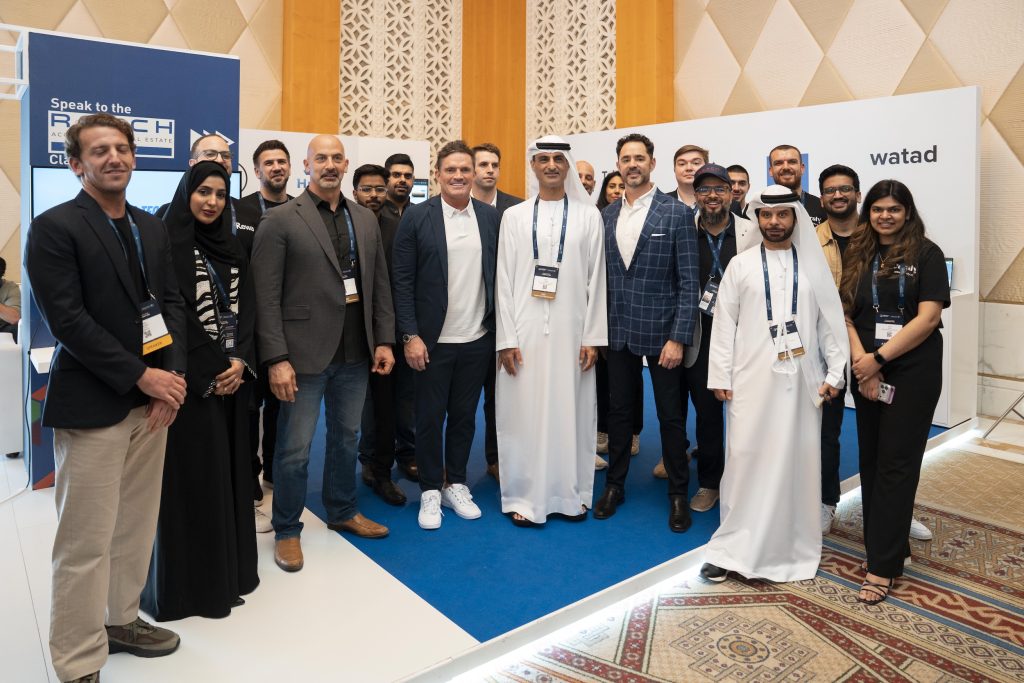
REACH Middle East Backs Seven High-Potential PropTech Ventures – Construction Business News Middle East
Dubai has produced global aviation giants, fintech disruptors and e-commerce powerhouses. Now, it is setting its sights on creating the next billion-dollar real estate technology company. REACH Middle East has cherry-picked seven innovative start-ups with a real chance of becoming a homegrown unicorn. The finalists have each received financial backing and were narrowed down from nearly 100 entries.
Endorsed by the Dubai Land Department, Dubai Technology Entrepreneurship Campus (Dtec) and backed by global venture platform Second Century Ventures, the eight-month accelerator will nurture a technology cohort and scale opportunities for company founders solving real-world challenges.
The chosen businesses are striving to make a meaningful difference to real estate services in the UAE, as well as Saudi Arabia and India. In the UAE alone, the proptech and digital real estate services market is estimated at over $5 billion and growing at 17% per year.
Siddiq Farid, Managing Director of REACH Middle East, said: ‘This programme brings together strategic influence and financial support to spur innovation within the real estate sector. With the robust backing of Dubai Land Department and Second Century Ventures, as well as world-class industry mentors, the programme provides our cohort companies with the very best chance of becoming future unicorns.’
Collectively, the selected start-ups represent solutions across digital services, AI-driven brokerage tools, immersive sales technology, rental innovation and construction finance – all sectors that are primed for rapid scale in the GCC. With record transaction volumes, rapid digitisation and strong investor appetite, the accelerator directly supports the demands of the market and the goals of the UAE Digital Economy Strategy, the Dubai Economic Agenda (D33), and the Dubai Real Estate Strategy 2033.
REACH provides a proven framework, financial backing, tailored mentorship, enhanced network and investor access, long-term alumni support and access to a global proptech community. Since 2019, REACH has supported more than 300 companies worldwide.
Farid added, ‘Silicon Valley and Europe have produced household name technology giants, but as Dubai attracts capital, talent and innovation, we are banking on the next big proptech success story coming from right here in the Gulf.’
Companies accepted to the 2026 REACH Middle East programme include:
Asano: a real estate development intelligence platform that unifies financial, development and spatial data to improve capital planning across large-scale real estate projects
Coraly: an AI-powered growth platform for real estate agencies
Fixit: an AI employee solution for real estate sales, helping agencies sell faster and smarter
HoloX: creator of digital twins for off-plan real estate sales, transforming complex master plans into interactive 3D experiences
Rewa: a platform that turns rental payments into rewarding financial experiences for tenants, while enabling landlords and property managers to collect rent digitally
Takeem: a digital rental platform to simplify processes, save upfront fees, pre-qualify tenants and de-risk landlord investments by protecting rental income
Watad: an AI-powered building materials procurement platform with embedded finance -
EU Officials Hold ‘Constructive’ Meeting To Strengthen International Role Of Euro
ISTANBUL, Feb 17 (Bernama-Anadolu) — European Union (EU) leaders held “constructive” initial discussions Monday on renewed efforts to strengthen the international role of the euro, EU Commissioner for Economy Valdis Dombrovskis announced, Anadolu Ajansi reported.
Dombrovskis said at the Eurogroup press conference in Brussels that the increasingly complex geopolitical environment provides a new impetus for action on this issue
“A greater international role for the euro can be an important cornerstone of our de-risking strategy and help to ensure economic and financial stability and security,” he said.
At the same time, Dombrovskis said, it can boost the EU’s competitiveness, for instance, by lowering borrowing costs and shielding EU importers and exporters from exchange rate fluctuations.
Dombrovskis explained that at the meeting, he presented finance ministers with a comprehensive set of possible actions regarding the global role of the euro, stating that its global appeal would be determined, above all, by the strength and resilience of the European economy.
He noted that within the EU, they need to implement the Savings and Investment Union, finalise the digital euro proposal, diversify their trade network, and improve their defence capabilities.
Pointing out that widespread use of the euro would contribute to these efforts, he said: “I would say that there was a broad consensus from ministers on working on the international role of the euro.”
He also said they discussed possible additional actions reflecting new challenges, adding, “There is a need to make EU retail payment systems more autonomous, building around the digital euro’s infrastructure and wide acceptance network, and to enhance the issuance of euro-denominated digital assets.”
— BERNAMA-ANADOLU -
Woman ‘died’ for 27 minutes and woke up demanding to write down two words
Woman ‘died’ for 27 minutes and woke up demanding to write down two words
For 27 minutes, Tina Hines was clinically dead.
While preparing for a hike with her husband Brian, she experienced a severe cardiac arrest which stopped her heart. In a desperate bid to save her, Brian administered CPR, ultimately reviving her with assistance from paramedics.
During the ambulance journey to hospital, Tina repeatedly drifted in and out of consciousness. By the time medical staff stabilised her condition, she had effectively been dead for nearly half an hour.
On regaining consciousness and unable to speak, Tina immediately seized a pen and paper. With trembling hands and barely opened eyes, she scrawled just two words: “It’s real.”
Initially, her husband Brian was baffled by the mysterious message. Was she referring to her suffering?, reports the Mirror. Or the hospital surroundings?
When he queried whether this was her meaning, Tina shook her head.
Only when their daughter suggested heaven did Tina acknowledge with a nod.
After making a complete recovery, Tina was able to articulate her experience and explain the profound message she’d written. She told journalists she had felt an unprecedented sense of tranquillity and serenity.
Moreover, Tina maintains she witnessed ‘Jesus standing’ before a ‘glow’ with outstretched arms.
“The colours were so vibrant,” she recalled. “It was so real.”
Following her extraordinary ordeal and complete recovery, Tina proceeded to write a book chronicling her experience, discussing how the episode fundamentally transformed her perspective on existence, fear and mortality itself.
Whilst for many people, encounters like Tina’s suggest proof of life beyond death, it should be acknowledged that opinion remains divided.
Numerous medical professionals contend that during bodily shutdown, the brain undergoes an intense spike in activity which may trigger hallucination-like phenomena.
This, coupled with pre-existing beliefs about what the hereafter might entail, could provide an alternative interpretation for what she witnessed and subsequently documented.
Nevertheless, Tina remains utterly convinced that she genuinely glimpsed the other side, and that her visions were nothing less than a portal into the authentic afterlife.
“Jesus is real,” she insists. “Heaven is real.”