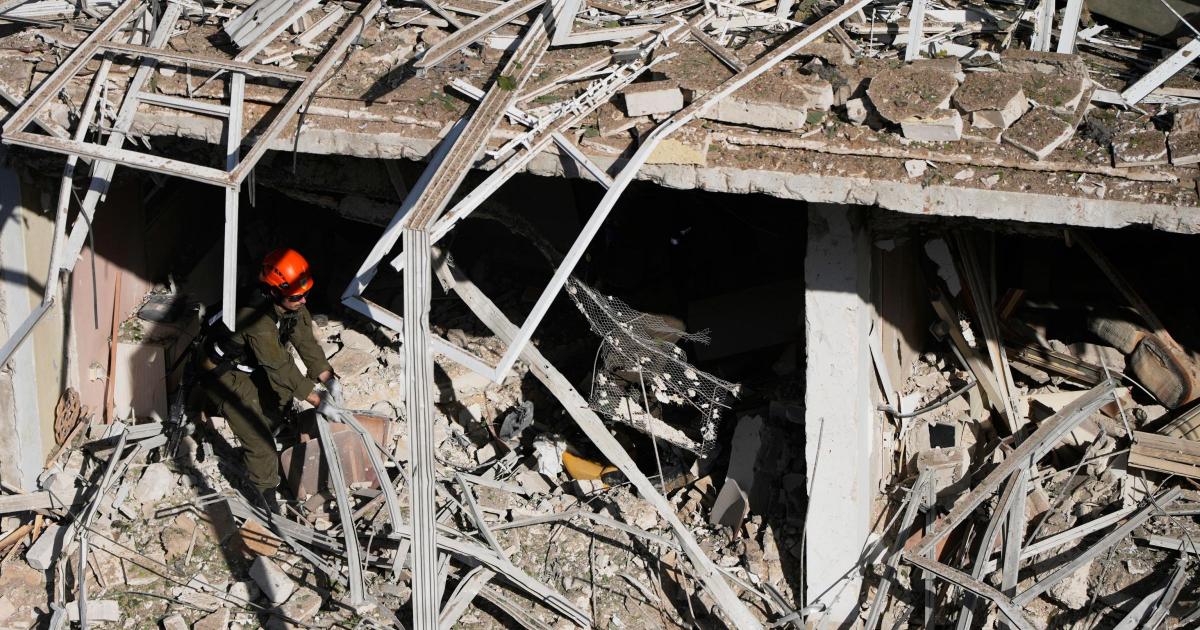
With thousands more US marines on their way to the Gulf, both sides firing intense barrages and Iran denying any negotiations are taking place, the war’s tempo remained high a day after Mr Trump delayed his self-imposed deadline for Iran to reopen the Strait of Hormuz. Tehran’s chokehold on that crucial waterway has snarled international shipping, sent fuel prices skyrocketing, and threatened the world economy. Pakistan has offered to host diplomatic talks, according to officials from there and two other countries involved. But Iran remained defiant on Tuesday, with the spokesman of its top military command saying that the armed forces would fight ‘until complete victory’. Any talks between the US and Iran – which appeared at the most tentative on Tuesday – would face monumental challenges. Many of Washington’s shifting list of objectives – particularly over Iran’s ballistic missile and nuclear programmes – remain difficult to achieve. Meanwhile, it is not clear who in Iran’s government would have the authority to negotiate – or be willing to, particularly as Israel has vowed to continue taking out leaders after killing several. Iran also remains highly suspicious of the United States, which twice under the Trump administration has attacked during high-level diplomatic talks, including with the February 28 strikes that started the current war. While Iranian parliament speaker Mohammad Bagher Qalibaf called the idea of negotiations with the US ‘fakenews’, foreign minister Abbas Araghchi’s office acknowledged he has been talking about the war this week with his counterparts in Azerbaijan, Egypt, Oman, Pakistan, Russia, South Korea, Turkey and Turkmenistan. Rubble covers the furniture of a destroyed living room in a residential building hit in an earlier US-Israeli strike in Tehran, Iran (Vahid Salemi/AP) The US had agreed ‘in principle’ to join talks in Pakistan, according to three Pakistani officials, one Egyptian official and a Gulf diplomat, while mediators were still working to convince Iran. The Pakistani officials said the ‘quiet diplomacy’ had grown more complicated since news of Pakistan’s attempts leaked. And in fact, Major General Ali Abdollahi Aliabadi, spokesman of Iran’s top military command, issued a defiant statement. Iranian state television quoted Maj Gen Aliabadi as saying: ‘Iran’s powerful armed forces are proud, victorious and steadfast in defending Iran’s integrity, and this path will continue until complete victory.’ The general did not say what ‘complete victory’ would look like, but it appeared likely Iran’s military was trying to warn against offering concessions in any possible negotiations. The Egyptian official said efforts are centred on ‘trust-building’ between the US and Iran, with the aim of bringing about a pause in the fighting. Israeli security and rescue forces respond at the site of an Iranian missile strike in Tel Aviv (Ohad Zwigenberg/AP) Israel is not involved. The official, who is involved in the efforts, said the priority is to prevent attacks on both Iran’s and Gulf Arab countries’ energy infrastructure and that they were working on a ‘mechanism’ for Iran to reopen the Strait of Hormuz. Talk of negotiations briefly drove down oil prices and boosted stocks. But that respite was short-lived, with the price of Brent crude, the international standard, nudging back over 100 dollars a barrel on Tuesday, up nearly 40% since the war started. Mr Trump’s announcement came as a contingent of thousands of marines is on the way to the region, raising speculation that the US may try to seize Kharg Island, which is vital to the country’s oil network. The US bombed the island in the Persian Gulf more than a week ago, hitting its defences but saying it had left oil infrastructure intact. Iran has threatened
Strikes hit Iran as Tehran targets Israel and Gulf states
Leave a Reply