Washington | US President Donald Trump says the United States is winning the war with Iran even as thousands of additional American troops deploy to the Middle East. He has pilloried other countries for not helping the US, only to say later he does not need their assistance. He has twice delayed deadlines for Iran to reopen the Strait of Hormuz. He has both threatened to “obliterate” Iran’s energy plants if the vital waterway remains largely shuttered and said the US was “not affected” by the closure. At one point this month, Trump said one of his predecessors — who, he strongly suggested, was a Democrat — privately told him he wished he had taken similar action against Iran. Representatives for every living former president quickly denied that such a conversation happened. As the war entered its second month on Saturday, Trump’s penchant for embellishments, exaggerations and falsehoods is being tested in an environment where the stakes are much higher than an isolated political fight. A president who has long embraced bluster and salesmanship to shape narratives and focus attention is confronting the unpredictability of war. Leon Panetta, who served Democratic presidents as defence secretary, CIA director and White House chief of staff, said he has ‘seen enough wars where truth becomes the first casualty.’ ‘It’s not the first administration that has not told the truth about war,’ he said. ‘But the president has made it kind of a very standard approach to almost any question to in one way or another kind of lie about what’s really happening and basically describe everything as fine and that we’re winning the war.’ Michael Rubin, a historian at the American Enterprise Institute who worked as a staff adviser on Iran and Iraq at the Pentagon from 2002 to 2004, said Trump is ‘the first president of any party in recent history that hasn’t self-constrained to live within rhetorical boundaries.’ ‘So of course it creates a great deal of confusion,’ he said. The zigs-zags are the point To his critics, Trump’s style is a sign that doesn’t have a coherent long-term strategy. But for Trump, the zigs and zags seem like the point, a method that keeps his opponents — and pretty much everyone else — always on their heels. The approach was clear this week in the hours before he announced the second delay of the deadline for Iran to reopen the strait. Asked what he would do about the deadline, Trump said he did not know and that he had a day before he had to decide. ‘In Trump time, a day, you know what it is, that’s an eternity,’ the Republican president said to laughter from members of his Cabinet. But investors are unimpressed, with US stocks closing out their worst week since the war began. To some on Capitol Hill, the freewheeling is more frustrating than amusing. Rep Gregory Meeks of New York, the top Democrat on the House Foreign Affairs Committee, lamented that Trump is ‘going back and forth and constantly contradicting himself.’ ‘The administration is winging it,’ he said. ‘So how can you trust what the president says?’ Republicans were not willing to go that far, but their concern was apparent heading into a two-week break from Washington. Sen John Kennedy of Louisiana said his constituents ‘support what the president has done.’ ‘But most of my people are also equally or even more so concerned about cost of living,’ he said. Republican Rep Chip Roy of Texas, who sits on the House Budget Committee and is a member of the conservative House Freedom Caucus, said his constituents
Category: Uncategorized
-
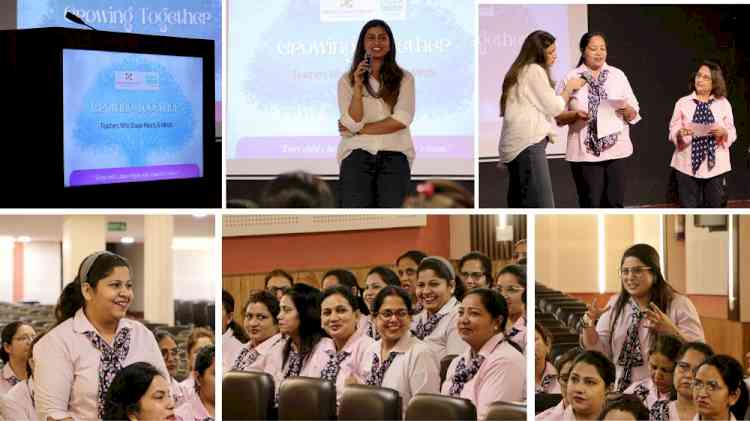
Teacher Enrichment Session Organised at Innocent Hearts School under DISHA
Innocent Hearts School organised a Teacher Enrichment Session under DISHA, an initiative of the Bowry Memorial Educational and Medical Trust, reaffirming its commitment to social development and quality education.
Jalandhar, March 28, 2026: Innocent Hearts School organised a Teacher Enrichment Session under DISHA, an initiative of the Bowry Memorial Educational and Medical Trust, reaffirming its commitment to social development and quality education. The session was conducted by Dr. Palak Gupta Bowry, Director CSR, as part of an Orientation Drive for the Professional Development of Teachers, and was specially designed for mentors of the Foundational Stage (Balvatika to Grade II). Teachers from various branches, including Green Model Town, Loharan, Cantt.–Jandiala Road, Kapurthala Road, and Noorpur Road, actively participated in the programme.
Dr. Palak Gupta Bowry shared valuable insights on enhancing teaching practices, promoting child-centric learning, and strengthening classroom engagement. The initiative aimed to equip educators with innovative methodologies and practical strategies aligned with the evolving needs of early childhood education.
Aligned with the theme ‘Growing Together: Teachers Who Shape Hearts and Minds,’ the session highlighted the crucial role of teachers in nurturing young learners while creating a positive and supportive classroom environment. Key discussions focused on managing personal stress, understanding the changing mindset of today’s generation, and the importance of not rushing children, as it may lead to anxiety and reduced confidence. The session also addressed how teachers may unknowingly transfer their fears to students.
She concluded with a powerful thought: ‘Confusion in a child is not a lack of ability, but a lack of clarity in teaching.’ She emphasised that ‘Coming Together is a beginning.’ The programme witnessed enthusiastic participation, with mentors actively engaging in discussions and interactive activities. A classroom-based scene further enriched the learning experience, encouraging teachers to adopt empathetic and reflective teaching approaches.
This initiative reflects DISHA’s ongoing commitment to enhancing educational standards and empowering teachers as key agents of change in society. -
David A. Olson Named to Barron’s “Top 1,500 Financial Advisors”
Rochester, MN, March, 2026 – Morgan Stanley announced today that David A. Olson, a Managing Director, Financial Advisor in the Firm’s Rochester Wealth Management office, has been named to Barron’s list of ‘America’s Top 1,500 Advisors: 2026 State-by-State.’
The ‘Barron’s Top 1,500 Advisors’ is a select group of individuals who are screened on a number of criteria. Among factors the survey takes into consideration are assets under management, revenue produced for the Firm and quality of service provided to clients.
‘I am extremely proud that David A. Olson is representing Morgan Stanley Wealth Management on this list,’ commented Peter Keller, Executive Director of Morgan Stanley’s Minnesota complex. ‘Competition is steep to be selected for this list, and those who make the cut represent a very high level of achievement in serving their clients’ wealth management needs.’
Morgan Stanley Wealth Management, a global leader, provides access to a wide range of products and services to individuals, businesses and institutions, including brokerage and investment advisory services, financial and wealth planning, cash management and lending products and services, annuities and insurance, retirement and trust services.
Morgan Stanley (NYSE: MS) is a leading global financial services firm providing investment banking, securities, investment management and wealth management services. With offices in 42 countries, the Firm’s employees serve clients worldwide including corporations, governments, institutions and individuals. For more information about Morgan Stanley, please visit www.morganstanley.com.
2026 Barron’s Top 1,500 Financial Advisors: State-by-State
Source: Barron’s (Awarded March 2026) This ranking was determined based on an evaluation process conducted by Barron’s for the period Oct 2024-Sept 2025. Neither Morgan Stanley Smith Barney LLC nor its Financial Advisors or Private Wealth Advisors paid a fee to Barron’s to obtain or use the ranking. This ranking is based on a formula that includes client retention, industry experience, review of compliance records, firm nominations, and quantitative criteria, including assets under management and revenue generated for their firms. Investment performance is not a criterion. Rankings are based on the assessment of Barron’s and may not be representative of any one client’s experience. This ranking is not indicative of the Financial Advisor’s future performance. Morgan Stanley Smith Barney LLC is not affiliated with Barron’s. Barron’s is a registered trademark of Dow Jones & Company, L.P. All rights reserved.
© 2026 Morgan Stanley Smith Barney LLC. Member SIPC. CRC# 5279111 03/2026 -

Music Tonight: Saturday, March 28
Abronia is a Portland band that has gained international recognition for its haunting invocations of the spectral landscape of crossroads converging in the valley of death beyond the western plains of the living. A place where the flesh must be sacrificed in the white heat so a caravan of charred bones can carry the soul through the burning hydrogen heaven of the stars which for the cowboy constellations of our American nightmare. Or something damn close. The group’s fourth record Shapes Unravel came out on Feb. 20 and it is a proper dream-weaver. You can see for yourself at the Miniplex tonight at 9 p.m., where local song trippers Vulture Feather and the ever-fantastic Uncredible Phin Band will be making this show one for the legends. Only $10 for all this magic seems like a hallucination from a different world as well.
Related -
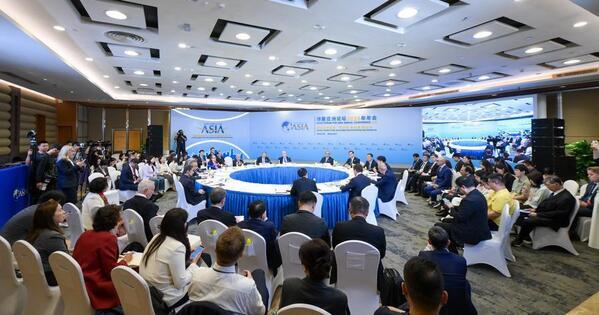
From observers to pace-setters, Global South pushes for better global governance at Boao forum
BOAO, Hainan, March 28 (Xinhua) — Amid rising global uncertainty and a shifting economic landscape, the Global South is emerging as a more active force in shaping global economic governance, as calls for greater solidarity and reform of the existing mechanisms grew at the Boao Forum for Asia (BFA) Annual Conference 2026.
“The Global South is no longer a passive bystander. We are becoming the active architects of the new world order,” said Sardor Umurzakov, advisor to the president of Uzbekistan on strategic development, during the BFA annual conference that concluded in south China’s Hainan Province on Friday.
By contributing up to 80 percent of global growth, the Global South has already become the primary driver of the world economy, according to Umurzakov.
Speaking at a panel discussion, Umurzakov identified key challenges, including income inequality, limited access to technology, the consequences of climate change, and geopolitical turbulence.
He called on Global South countries to focus their efforts and cooperate on developing human and social capital, green transition, climate agenda, and security and stability.
Shahid Khaqan Abbasi, former prime minister of Pakistan, has also emphasized the need for greater Global South cooperation to jointly address climate and energy security issues.
With the world facing multiple pressures from intensifying conflicts and rising unilateralism, multilateral mechanisms, including the United Nations and the World Trade Organization, are under severe strain, Abbasi said.
Many participants noted the persistent lack of voices of developing nations within the international architecture, stressing the need for reforms to ensure that the existing global governance mechanisms better reflect current realities.
“We need to reform and improve the international political, economic and financial order, to make the orders and the rules fairer and more accommodating to the developing world and Global South countries,” said Xu Bu, former president of the China Institute of International Studies.
Sohail Khan, deputy secretary-general of the Shanghai Cooperation Organization (SCO), echoed the calls for inclusive reforms in world multilateral bodies so that the Global South can gain a stronger voice in setting global economic rules.
Khan spoke highly about the Global Governance Initiative proposed by China, which he said voiced support for multilateralism, equal governance, equitable voice, and equitable representation.
The China-proposed initiatives, including the Global Governance Initiative, are “a very positive sign” that China wants to work with the rest of the world to improve the current system, which will benefit the world, said Kishore Mahbubani, a renowned scholar at the National University of Singapore.
Beyond reforms, speakers at the Boao forum suggested making full use of existing mechanisms, such as BRICS and the SCO. They also pointed to the Belt and Road Initiative (BRI) as a vital platform for fostering regional cooperation and development.
Maria Fernanda Espinosa Garces, president of the 73rd session of the UN General Assembly, said the Global South has demonstrated robust dynamism across cooperation platforms such as the New Development Bank and the BRI.
She particularly praised the BRI as “a very compelling case,” which has delivered tangible benefits in more than 150 countries. It is not a physical corridor, but a corridor “of trust, of friendship, and of new forms of plurilateralism,” she said. -

Workers’ fear slows AI adoption despite productivity gains
A growing body of research suggests that employee concerns, rather than a lack of skills, are slowing the adoption of artificial intelligence in the workplace. A recent Forrester report, along with Goldman Sachs data, indicates that human factors remain the primary barrier to the widespread implementation of AI technologies. While skills gaps are often cited as a key challenge, the findings suggest that workers’ reluctance also plays an equally significant role. Many employees appear wary of engaging with AI tools, particularly in an environment marked by ongoing reports of technology-driven job cuts. This hesitation is limiting the pace at which organisations can integrate AI into everyday operations. Concerns about job security are especially prominent. More than two in five workers, or 43%, believe that automation could lead to widespread job losses within the next five years. This fear is not abstract, as around one in four employees think their own role could be at risk. Such anxieties are contributing to mistrust and a reluctance to experiment with AI, even in roles where the technology could improve efficiency. Business leaders embrace AI while the workforce remains cautious The data also highlights a clear divide between how business leaders and employees perceive AI. Among UK executives, more than half (51%) view artificial intelligence as a means of reducing staff costs. In practice, this has already translated into workforce changes, with half of the respondents reporting that AI has helped cut headcount. Future expectations suggest further disruption. Around 43% of managers anticipate a decline in entry-level roles as automated systems increasingly replace these positions. At the same time, the appetite for AI integration continues to grow, with 85% of UK managers stating they would hire an autonomous AI employee if given the opportunity. Despite these concerns, adoption rates among businesses are rising. According to the Goldman Sachs data, 98% of the 10,000 small and medium-sized businesses surveyed are already using AI in some capacity. Among these organisations, 72% report improvements in employee productivity, indicating that the technology is delivering tangible benefits. Early adopters appear to be gaining the most advantage, particularly in sectors such as marketing and content creation. However, AI is now expanding into areas such as analytics, sales, and operations, opening new opportunities for workers in those fields to integrate the technology into their workflows. Experts suggest that employees who actively engage with AI may be better positioned to remain competitive as adoption accelerates. Both reports underline the need to reposition AI as an opportunity rather than a threat. However, achieving this shift will require greater effort from employers to address employee concerns and provide meaningful support. Communication is seen as critical, with organisations encouraged to highlight benefits beyond simple productivity gains and to reassure staff about their long-term value. Training also remains a significant gap. Only 51% of companies currently offer AI training to non-technical employees, a modest increase from 47% in earlier data. This means that nearly half of the workforce lacks access to formal guidance on using AI tools effectively. Even more striking, just 23% of employees have received support in prompt engineering, a skill considered essential for maximising the potential of generative AI systems. The broader context of layoffs in the technology sector continues to shape perceptions. Reports surrounding Meta, including speculation about potential workforce reductions and confirmed job cuts, reinforce the association between AI and job displacement. Although some of these developments remain unconfirmed, they contribute to a climate of uncertainty that affects employee sentiment. Industry observers argue that businesses must take a more proactive role in easing these concerns. This includes investing in reskilling initiatives,
-

‘Some of our employees fear job loss, and it turns them away from AI altogether’: AI is helping boost productivity for some workers — but others still say they’re afraid to use it
Workers think that using AI will lead to AI replacing them in the future Companies are already using AI to push workforce reductions Employers should upskill workers for the inevitable change A new Forrester report (via The Register), along with data from banking giant Goldman Sachs, has claimed humans remain the main blocker to widespread workplace AI adoption – and it’s probably not the skills shortage we hear about day in, day out. Though untrained workers are still preventing some successful AI deployment, it’s likely that employee reluctance is also keeping adoption rates relatively low, with many workers likely to feel threatened by the technology, especially against a backdrop of continuous tech and AI-induced layoffs. It’s the fear of job loss that’s likely the biggest deterrent for reluctant workers, with more than two in five (43%) concerned that automation might cause widespread job losses within the next five years. Article continues below Workers are still worried that AI will take their job For many, it’s a very personal threat – around one in four workers believe their own job is at risk, which is causing anxiety and mistrust that’s lowering workers’ willingness to actually engage with AI tools in the first place. It’s a sentiment that’s largely acknowledged by leaders, too, with more than half (51%) of UK business leaders seeing AI as a way to cut staff investment. Half already say AI has helped them to reduce headcount, with 43% of managers expecting fewer entry-level roles to be supported in the future as they get replaced by artificial intelligence. Most (85%) UK mangers, per the Goldman Sachs data, say they would hire an autonomous AI employee given the opportunity. As for the 10,000 SMBs cited in Goldman Sachs’ research, 98% report using AI and 72% have seen improved employee productivity. Are you a pro? Subscribe to our newsletter Sign up to the TechRadar Pro newsletter to get all the top news, opinion, features and guidance your business needs to succeed! Contact me with news and offers from other Future brands Receive email from us on behalf of our trusted partners or sponsors The company specifically says that early adopters are more likely to see the highest success, and the tech has been particularly prevalent across marketing and content creation. With analytics, sales and operations now opening up to the tech, workers in those sectors are best positioned to get onboard with the tech so that they don’t risk being left behind. With this in mind, other sectors that currently show low AI adoption are also well-positioned for workers to spearhead AI initiatives, proving their worth and working with the tech rather than blocking it out. The two reports largely carry the same message, that AI should be reframed as an opportunity for workers and companies, not a threat. However, it lies on employers to both communicate the benefits of the technology beyond plain and simple productivity gains, and to offer workers upskilling opportunities to stay relevant in an emerging landscape. However, the reality is that only half (51%) of firms offer AI training for non-technical staff, and while this is a minor jump from 47% in the previous round of data collection, it still only covers half of workers. Even fewer (23%) have been given AI prompt engineering support, affecting effective usage altogether. With Meta reportedly preparing to cut 20% of its headcount – a rumour that’s still just speculative, but has been partly backed up by 700 job losses this week (via NY Times) – it’s difficult to avoid AI’s negative connotations, but looking ahead, it’s clear that
-

WTO reform talks face US-India wall in Cameroon: Report
Large differences remain between most countries and the U.S. and India as trade ministers meet to discuss reforms at the World Trade Organization, two diplomats told Reuters on Friday. The ministers are meeting for four days in Yaounde, Cameroon, as the organisation faces a critical test to its future amid a year of tariff-fuelled trade turmoil and large-scale disruption to shipping, energy prices and supply chains due to the Middle East conflict. “There is a real commitment among ministers to reach an agreement on reforms, but there is a big elephant in the room blocking: India and the U.S.,” a senior diplomat told Reuters. Another diplomat from an African country said India so far has not shown signs of a change in position. Some flexibility, however, might be possible. “In the corridors we have lots of hope,” the person said. The diplomats declined to be named due to the sensitivity of the ongoing negotiations. While the U.S. and India acknowledge the need to reform the global trading system, they have resisted proposals of a substantive workplan on reforms. “Unfortunately on reform I don’t see much room for manoeuvre between the U.S. and India’s positions,” the senior diplomat said. India has also opposed an agreement to aid investment into developing countries, as well as the U.S. proposal to permanently extend an e-commerce moratorium on customs duties on electronic transmissions such as digital downloads, which expires this month. “The U.S., China, EU and UK positions are reasonable, but there is one party that we need to see compromise from to make progress – India,” said Chris Southworth, the Secretary General of the UK International Chamber of Commerce “I think frustration among members will start to spillover here in Yaounde if we see no progress,” he said. INDIA’S POSITION India’s Minister of Commerce and Industry Piyush Goyal has cast doubt on U.S. efforts to extend the e-commerce moratorium, saying it warranted a “careful reconsideration”. India is concerned about a loss of tariff revenue. The U.S. USTR Jamieson Greer said on Thursday Washington was “not interested” in a temporary extension to the ban, only a permanent one. Goyal has also challenged moves by the EU, U.S., Canada and others for a subset of members to take their own decisions through plurilateral agreements, saying any outcome should be agreed by consensus. That has cast a shadow over whether an Investment Facilitation for Development Agreement to encourage foreign direct investment in developing and least-developed countries can be incorporated into the WTO rule book in Yaounde. Turkey on Thursday lifted its opposition to it. Goyal’s position showed that India is seeking to protect the WTO’s core architecture, Ajay Srivastava, founder of Delhi-based think tank Global Trade Research Initiative and a former Indian negotiator told Reuters. “Together, these risk turning the WTO from a rules-based body into one driven by power and selective coalitions,” he said. There is also a deadlock at the WTO on one of New Delhi’s key priorities: a permanent solution on public stock holding to allow developing countries to give subsidies to rice and wheat farmers through a price support mechanism. Big agricultural exporters like the U.S., EU and Australia fear it would allow countries like India to build large stocks of foodstuffs and dispose surpluses, potentially distorting trade and markets. Randa Sengupta, a senior researcher at the thinktank, the Third World Network, said PHS was a important means to support farmers and enable food security for poorer communities in India. ‘CONSTRUCTIVE’ TALKS A concrete reform workplan, which would be “as substantive” as possible, was within reach, Norway’s Foreign Minister Espen Barth Eide told
-

NetDragon Announces 2025 Annual Financial Results
Cost Optimisation Delivered Notable Results with Operating Profit Up 48% YoY in H2 2025 Final Dividend of HKD0.5 Per Share, AnnoNetDuncing New Shareholder Return Program of No Less Than HKD600 Million HONG KONG, March 26, 2026 /PRNewswire/ — NetDragon Websoft Holdings Limited (‘NetDragon’ or the ‘Company’; Hong Kong Stock Code: 0777), a global leader in building internet communities, announced its financial results for fiscal year 2025 today. NetDragon’s management team will be hosting a conference call and webcast on March 27, 2026 at 10:00am Hong Kong time, to discuss the results and recent business developments. Dr. Dejian Liu, Chairman of NetDragon, commented: ‘In 2025, following our strategy to ‘Fully Embrace AI’, the Company further introduced the ‘AI Now’ strategy to fully implement our transformation. We have made encouraging progress across our core verticals of education, gaming and AI+ strategic investments across various sectors. The Company has taken initial steps of transforming into an AI organisation, advancing toward our long-term vision of becoming a global leader in AIGC. Meanwhile, we continued our operational optimisation initiatives. Our overall operating expenses for the year decreased by 22.2% YoY, while operating profit in the second half of the year increased by 47.7% YoY. We expect the benefits of cost optimisation to be further realised in 2026, laying a solid foundation for the Company’s long-term value creation.’ ‘In education AIGC, leveraging our AI Content Factory, we achieved multiple breakthroughs in product innovation, content creation, and AI integration, building a digital education ecosystem centered on ‘gamified learning’ and laying a strong foundation for scalable, intelligent and immersive learning experiences. Our US-listed subsidiary, Mynd.ai has reduced the segmental operating expenses by 21.1% YoY in 2025, whilst the adjusted EBITDA loss has been reduced by 61.8% QoQ in 4Q 2025. In gaming AIGC, we are actively incubating AI-native games, expanding into new genres and exploring the next-generation gaming experiences driven by AI as the core operational logic. Our flagship IP maintained solid profitability, with the core segmental profit margin of the gaming and application services reaching 27.4%, representing an increase of 3.9 percentage points YoY, whilst the profit scale remained solid. In AI+ strategic investments, we are focusing on unlocking the potential of AI computing power and AIGC production capacity. We will continue to invest in various frontier sectors such as AI and AR .’ ‘We have also established several significant strategic collaborations to support our long-term development. We have entered into a partnership with Volcengine, ByteDance’s cloud and AI service platform. Together, the two parties will build a deep competitive moat integrating technology, resources, and ecosystem in China’s higher education and vocational education sectors. By scaling the production of next-generation AIGC educational resources, we aim to create a globally co-created and shared innovative education ecosystem. We established a long-term cooperation with Thailand’s Ministry of Higher Education, Science, Research and Innovation (MHESI) to systematically advance an AI-driven ‘Learn-to-Career’ ecosystem in Thailand. With the support of the World Bank, we signed a cooperation agreement with Ministry of Secondary Education of Cameroon (MINESEC) to jointly promote the digital transformation of 250 schools across the country. In addition, our Hong Kong subsidiary Cherrypicks successfully secured the strategic investment from Zhongke WengAI, a leading AI enterprise in China and has repositioned as the exclusive overseas expansion platform and commercialisation partner for Zhongke WengAI in overseas markets. Supported by these strategic partners, We are well placed to accelerate our progress toward becoming a global leader in AIGC creation.’ ‘Our ongoing efforts in key aspects of sustainable development, such as environmental protection, social responsibility, and corporate governance, have continued to receive widespread recognition. Recently,
-

Texas Innovation Ecosystems Explored at America House Panel
Austin, Texas (Newsworthy.ai) Friday Mar 27, 2026 @ 6:00 AM Central —
An exclusive America House panel discussion, moderated by , host of The Building Texas Show, recently convened national and Texas innovation leaders at the Texas Capitol. The event, made possible by CS Freeland and Representative Donna Howard, fostered dialogue on the state’s burgeoning entrepreneurial ecosystems, investment trends, and unique collaborative spirit.
The panel, which took place during a week of significant activity in Austin, brought together ecosystem builders, investors, and startup founders from across the country to share insights into the past, present, and future of innovation.
Spotlighting Texas’s Collaborative Advantage
Justin McKenzie opened the discussion by highlighting the growing momentum in Texas entrepreneurship:
‘Mayors are investing in these programs. They’re really looking at how can we build more founders from our communities,’ explained McKenzie.
The discussion underscored that Texas, as the 8th largest economy globally, is still in the early stages of realizing its full innovation potential. Panelists emphasized the state’s natural collaborative networks, which differentiate it from other major tech hubs.
Key Insights from the Panel:
Diverse Founder Support: Preston James, Co-founder and CEO of DivInk, spoke on driving social economic equity through entrepreneurship, supporting diverse founders, and launching over 150 companies.
North Texas Innovation: Pamela Cytron, of The Founders Arena a leader in the wealth tech accelerator space, discussed intentional institutional innovation in North Texas and the strategic leverage of corporate headquarters and private capital. She emphasized the importance of connection: ‘Connecting communities and bringing us all together wherever we’re at is going to be as important as it’s ever been in our, at least in my career.’ – Pamela Cytron
Houston’s Undersung Ecosystem: Jesse Martinez detailed Houston’s diverse tech landscape, including Helix Park (medtech/life sciences), TMCI (medical center), Green Town Labs (climate tech), and The ION (AI/sports tech), noting the need to better promote its robust innovation.
Statewide Collaboration & Investment: Panelists reinforced that Texas’ strength comes from regional collaboration, with angel networks across the state (like CTAN, Houston Angel Network, North Texas Angel Network, and Alamo Angels) co-investing in emerging companies. This critical mass of talent and capital, combined with public investment initiatives (CIPRI, DeepRIT, Texas Space Commission), de-risks and catalyzes private funding.
The consensus highlighted that Texas’s unique “connective tissue” of relationships across cities and institutions fosters a collaborative environment where a win for one region is a win for the entire state, promoting a shared vision for prosperity.
About The Building Texas Show:
Hosted by Justin McKenzie, The Building Texas Show delivers in-depth conversations with leaders, builders, and innovators driving growth across Texas. From economic development to community storytelling, the show highlights the people and projects shaping the state’s future.
About America House:
America House is a premier, invite-only event series spotlighting the national innovation landscape. Conceived as a non-political platform, it brings together ecosystem leaders from across the United States to deliver state-by-state briefings and foster collaboration among top innovators, investors, and stakeholders.